DSC_8934

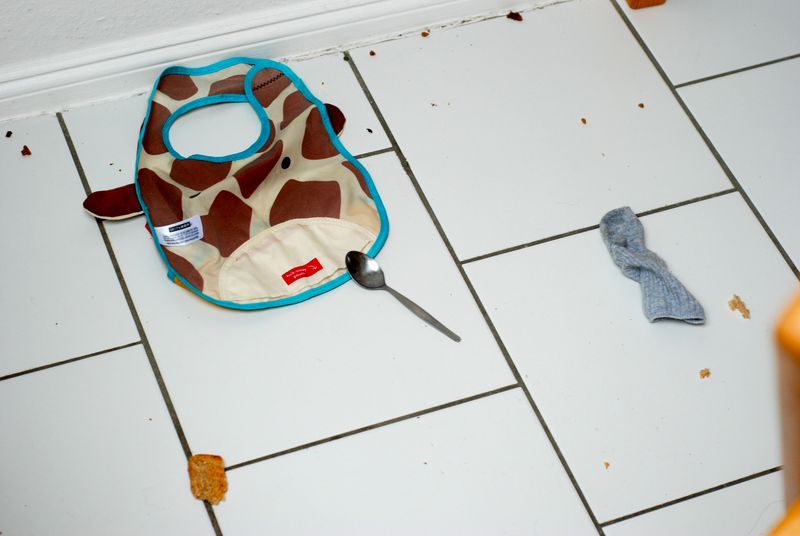
Hello! Don't think I've forgotten about this little series. It's just that for a while there, well, Hugo sort of went on a food strike. (In addition to the nap strike! I know.) And it was so strange and so frustrating that I sort of couldn't bring myself to write about it while I was in it. You know? He stopped wanting to eat my lovingly prepared vegetable purées, he stopped being interested in the food I made for myself and he threw everything I put in front of him to feed himself on the floor. A few times, he even reached inside his mouth after I put a spoonful of food in it and sort of clawed out the food, shrieking all the while in disgust. It was awful.

In retrospect, I think it was an unholy combination of teething and too
many bottles and textural issues and also just plain babyhood and I'm
very, very glad to say we seem to have worked things out. Now
Hugo gets a big bottle first thing in the morning and another big one
before bed, but the rest of the day, he eats three proper meals at the
table. It's so satisfying and wonderful to see him digging in to
whatever I put in front of him. Phew.

But some of my behavior while this was going on was giving me pause. When Hugo refused to eat something, I'd quickly prepare something else and offer to him instead. When that got thrown on the floor too, I'd look for yet another thing to give him, often resorting to buttered bread or pasta. After all, I couldn't very well let my almost 11-month old go hungry, could I? Those rules about not cooking things to order for your kids obviously were only meant for older kids, right?

Except then I was hanging out with my French girlfriend Marguerite and when I told her about what was going on and how I was dealing with it, she did one of those half double-takes backwards and shook her head gently. "Oh, no, Luisa. He refuses to eat? Then that's it. Don't make anything else for him." But, but, I protested. He's just a baby! Won't he be hungry? Won't he wake up in the middle of the night? Aren't I sort of then sending him to bed with no supper and won't I be judged cruelly for that and sent packing straight to Hades? "No! He has his evening bottle, right? He's almost 11 months old. He'll be fine." And, um, she was right.

So today, folks, I want to write about French rules for feeding children.

When I was pregnant, I read Pamela Druckerman's Bringing Up Bébé (French Children Don't Throw Food is the UK title). It had gotten a lot of mixed reviews – I got the impression that many Americans didn't like the idea that the French, yet again, were trying to tell them how to do things better. But I really liked the author's story, her self-deprecation and her admiration for what the French do actually get right with child-rearing. (And yes, at this point, you may substitute many other words for French: Europeans, Asians, common-sense folks, the older generation.) Particularly with regards to food. (NB: The book deals with many aspects of child-rearing in France; food is just a small part of the book.)

Then, I decided to read Karen Le Billon's French Children Eat Everything, which centers around the author's experience of moving to France with her two small, very picky children and learning the hard way about how to get them to eat better and behave better around food in general. Le Billon's husband is French and the pressure from his family and the community is very hard on the author; I often felt such sympathy for her predicament, caught between her own culture which had influenced her daughters' bad habits and her French in-laws's glowering disapproval. It can't have been easy for her to be the only foreigner in a small French village, surrounded by such rules and rigidity. By contrast, Pamela Druckerman's experience is far gentler. The French come across far nicer, too.

But both women observe many of the same phenomenon when it comes to children and food in France:

1. Babies are fed things like blue cheese, puréed beets and other strongly-flavored food right from the start.

2. There is a great reverence for the ritual of sitting down at a nicely set table for each meal, together.

3. The emphasis is on food being a purely sensual experience, not one in which punishment or reward ever plays a role in any way.

4. The importance of serving food in courses (vegetables to start, for example, then a main course of pasta, perhaps, or meat, and then fruit or yogurt for dessert), to give even a baby a sense of how a proper meal should unfold.

5. Never, ever, ever eating outside of set mealtimes (which are breakfast, lunch, afternoon snack and dinner).

6. Following the child's lead if he or she refuses to eat and simply ending the meal. No drama, no fuss.

There are others, too, but these are the ones that resonated the most with me. And they inspired me to make a few changes to mealtimes with Hugo. Not only do I no longer continue offering him different things until something "sticks", I also don't wheedle and cajole him into eating one more bite of anything. If he's done, he's done and I respect that. I also don't give him any snacks (though this one is a little tougher to enforce with his softie grandmothers around) in between meals, which almost guarantees that he's happy to eat his meals with real gusto.

So, tell me, readers! Have you read either of those books and if so, what did you think? Did you find inspiration in the pages or were you already feeding your children à la française? Is your home culture similarly "strict" with rules for feeding children? Or do you think the whole thing is authoritarian and awful? Tell me what you think, about any and all of it.

Also: What school lunches in Japan are like.

Posted in

58 responses to “Cooking for Hugo: A French Food Education”

  1. Nishta Avatar

    My partner & I read Bringing Up Bebe before adopting our son as a newborn, and it definitely informed a lot of our parenting, particularly how we’ve handled food. Our son is 9 1/2 months old, and he eats what we eat, everything from medium-rare steak to cauliflower to the Indian food his grandmother cooks for him.
    I recently wrote a post outlining what we did, and how, and why–
    http://bluejeangourmet.com/2013/04/26/feeding-baby/
    glad to hear that things are going better for you and Hugo in the realm of food!

    Like

  2. Christy Avatar
    Christy

    I don’t have kids yet, but I read both of those books last year after seeing a friend (who is a very picky eater) try to teach her toddler to eat (who is turning into a very picky eater). I knew there had to be another way, and these two books were very encouraging to me. Glad to see that you like them too!

    Like

  3. Karen from Canada Avatar
    Karen from Canada

    Be flexible. Make it suit your family as you go along. When your baby goes through a growth spurt, he may need snacks. Trust your instincts.
    The family I grew up in ate by the clock. All of us struggle with weight issues. I think we were taught not to trust our internal clock.
    My children, all now in their 20’s, were allowed healthy snacks whenever they were hungry. None struggles with weight and they are all good cooks, better than their peers (what! you can MAKE whipped cream, not just squirt it out of a can?)and they set a lovely table and entertain frequently.

    Like

  4. Carola Avatar

    Is it really “french”?
    I feed my children similar and it works.
    Greetings from Hamburg!

    Like

  5. sarahkeith Avatar

    Great synopsis of those books! I read them both recently too, and have been very interested in learning about how to instill great eating habits and “non-pickiness” in my kid, who is 8.5 months old and still strictly breastmilk fed. I hope to start her on solids soon and have been going back and forth about Baby Led Weaning vs. purees– I was convinced that BLW was the way to go until I read Le Billon’s book and learned that french people mix new foods with milk to introduce new tastes and I really like that idea too. This is such a fascinating topic for me and I really hope that I’m able to follow at least some of the french “rules.” Though I know it will be more challenging here in America, with my baby cared for by others during the day.

    Like

  6. sarahkeith Avatar
    sarahkeith

    Thank you for sharing this perspective!

    Like

  7. Luisa Avatar

    As I wrote in the post, right after the jump, there are many countries that would claim this kind of food education as their own.

    Like

  8. Sylee Avatar

    Best photo ever – and I love how you’re on fire here.

    Like

  9. Charlotte Avatar
    Charlotte

    I love the English title of the book. I read both books last year when I was in the middle of a supremely frustrating round of not eating by my then 6 yr old. In the end neither book was able to help per se (he has other issues that inform his eating which are not addressed in the book) but I will admit that when I live by the principles (let them chose how much to eat, no drama, no fuss, you choose what is offered, structure to mealtimes, etc) there is a lot less angst. The hardest part is getting everyone else on board – especially as my child eats so little and is so thin (but healthy).

    Like

  10. Caleen Avatar
    Caleen

    Oh, I’m so going to read those books! I have a 7 month sweet baby girl (Ruby) who loves food. She had her first taste of fish last night and loved it! Then a very picky 5 year old as well…cooking him (Isaac) a separate meal every night.
    Thank you for this article!

    Like

  11. Nishta Avatar

    sarahkeith–I did a combination of BLW & purees that worked really well for us. If you’re interested in reading more about what we did, I wrote about our approach–
    http://bluejeangourmet.com/2013/04/26/feeding-baby/

    Like

  12. MMS Avatar

    I found when they were babies, and still find now that they are 6 and 9, that my kids eat meals better if we cut out all snacking except something reasonable around 4pm. And I never provide an alternate dinner to the one the grown ups are enjoying. We do sometimes rely on a special dessert as a reward, and I do often ask them to take another bite of protein or a few more mouthfuls of the vegetable before they leave the table. Shrug. A little of this philosophy, a little of that one.

    Like

  13. camille Avatar
    camille

    I wholeheartedly recommend Dr Carlos Gonzales’ book “My child won’t eat” (I read it in French as “Mon enfant ne mange pas”). It addresses the considerable discrepancy between what parents think children should eat and what children truly need to eat.
    It is the most de-stressing, no-nonsense book I’ve read on the subject of children and food (and yes, I’ve read several!), and it made me laugh several times, too, as the author has a good sense of humor — a rare enough occurrence in baby-related books to be mentioned.

    Like

  14. courtney Avatar
    courtney

    I wholeheartedly agree with never letting rewards or punishment come into play with eating. I feel like that is just setting your child up for an eating disorder.
    I agree with Karen from Canada’s comment. You have to follow your gut. My 5 year-old daughter eats voraciously every morning. There are times she eats solid from breakfast until lunch, and she’s done that from the time she was a baby. But because I don’t put pressure on her to “eat one more bite!” and I try to not use food as entertainment, I feel comfortable allowing her to know her own body and when she’s hungry. Children are born with natural hunger cues. I’ve worked hard not to override that for her, since mine is long gone 😉

    Like

  15. Cait Avatar

    I don’t have kids yet, but I got through several years of nannying with the same food “rules” that I and my six siblings were raised by:
    This is what we’re eating. No, I am not making you a separate meal.
    We eat vegetables first, always.
    Fruit is a dessert. Yum, isn’t it delicious?
    If you are starving for a snack, there are baby carrots in the fridge.
    If you throw food on the floor, or in any other way indicate that you are done, then we’re done. Out of the highchair, and onto something else.
    Kids will not starve! Believe it or not, they will eat when they are hungry. What I find interesting, is that my roommate (and good friend) was raised by parents that catered to her and her sister, allowing them to become extremely picky and cooked them alternate meals at the drop of a hat. She is the pickiest 24-year-old I know, and she misses out on a lot. I cook only for me, because I just can’t keep track of everything she won’t eat.

    Like

  16. Anna Avatar

    I have heard of these books and I like these ideas, thanks for outlining them and sharing your experiences. I always wonder about the no snacks between meals for myself and think that it would be impossible because I would get way too hungry. Right now I am four weeks from the due date of my first baby so I’m not going to give up snacks for now, but I would like to try it someday because it probably makes a lot of sense.

    Like

  17. Rachael Avatar

    Oh, you’re doing such a good job with these posts! Keeping it candid. I read the books too, but it’s amazing how quickly they slip your mind. I was euphoric over having a baby who ate everything (after refusing all food until age 1) and then crushed when she phased into opinionated eating. Now I’ve somehow become the mom who will offer three different types of food! You’re influenced more by your peers than you ever realize, I think. But, you read Dinner a Love Story, too, I think. That gave me a little bit of relief of not obsessing over habits built with toddlers. Ever striving toward an approach, but not taking it too hard if I became “that mom” every now and again.

    Like

  18. JackieD Avatar
    JackieD

    If you haven’t already read or heard about it Ellyn Satter is a pioneer in the field of childhood eating/behaviors. You might take a look at her book “Secrets of Feeding a Healthy Family.” She’ll likely reiterate a lot of what you’ve already read, but she has some interesting case studies and more of the science behind it.

    Like

  19. Kristi Avatar
    Kristi

    Child of Mine by Ellyn Satter is my food bible. Basically lays forth the rules you now follow. It changed my life. I love how it took all the pressure off me when they eat. The only drawback is it makes it SO hard to eat with other parents who beg their kids to eat more or offer rewards. Or have my in-laws ask my kids to eat “big tiger bites” of food. So annoying. I also like that it made me eat healthier and also made me realize I could stop eating when I wasn’t hungry anymore, just like my kids!

    Like

  20. Eleanor Avatar
    Eleanor

    Another great piece, Luisa! Whilst I am not French, I spent much of my childhood in francophone countries, as well as spells living in France as a young adult. In my family, very similar points were observed to those you’ve listed. I’m sure these nurtured our shared love of food, and conviviality that comes with cooking and eating together. Also, when Hugo’s a few years older, he can enjoy a fantastic snack that French kids eat after school – le goûter. In my day, it was a stick of dark chocolate stuffed into a bit of fresh, torn-off baguette – delicious!

    Like

  21. Honeybee Avatar
    Honeybee

    Something like “yum, isn’t it delicious” is bound to make our toddler VERY wary of the food we’re giving her. 😀

    Like

  22. Zoe Avatar
    Zoe

    My son is 17 months and is either a voracious eater of everything under the sun…or survives on air. It can be so frustrating when something lovingly prepared is refused over and over (and this is over days, not over the course of a meal – there have been tears!) For a while we actually offered him bought toddler meals (nice ones, from Organix – spinach falafel, thai green curry, not mush) because it was less soul crushing when he clamped his mouth shut day after day.
    The one thing we don’t do yet in that list is sit down as a family to eat. My son’s pattern starts around 6pm for a 7.30ish bedtime. On weekends we do all eat breakfast and lunch together but 6pm for food is just too early! We’ll have some tea or an apero so we’re all sitting down together, but in the week we’re not even all home by 6pm. Eventually I’d like to push it back to at least 7pm so we can all eat together but I don’t want to push bedtime too late…
    How do others do it? Especially in Spain! We’re going to Andalucia at the end of the month and when dinner’s at 10pm, what hope is there of sitting down together…

    Like

  23. Zoe Avatar
    Zoe

    I should clarify, there have been tears from me, not him – we haven’t forced anything down his throat and I don’t let him see me get upset.
    There is a certain despair that comes when you’ve made something he’s always loved and eaten heartily…he’s now refused it for the 3rd day in a row…and now it needs to go on the compost heap.

    Like

  24. jean Avatar
    jean

    The mantra “you decide what the child eats and the child decides how much” is definitely the best way to approach feeding children. But it’s easy to be tempted to offer something else so you don’t feel as though you’re starving them . . . I do think that the “no snacks” rule makes more sense for slightly older kids. Babies and toddlers still have tiny stomachs so it makes sense to offer smaller quantities more often.

    Like

  25. Jennifer Jo Avatar

    I read the Druckerman book and it inspired me to start feeding my children in courses. Except my kids called it “eating in curses.” (Spoiler alert: it was a roaring success.) http://bit.ly/NaGQBm

    Like

  26. Honeybee Avatar
    Honeybee

    I haven’t read any parenting book related to food. We have breakfast, sometimes a mid-morning snack (depending on how early sigh breakfast was), lunch, afternoon snack and dinner, sitting down together at the table. Now, I’m relaxed when our toddler won’t eat, it means she’s not hungry. I don’t offer anything else to eat and she never asks. But I admit that I found the not-eating more stressful when she couldn’t speak yet! And I understand that it’s not so easy to accept when your kid is very thin.
    As for dining in courses – no, we don’t do that (unless we have guests). Never, ever, ever (?) give food unless at mealtime? No, not usually, but come on, hardly anything is “never, ever, ever” in life. 😉

    Like

  27. Sally Avatar
    Sally

    My kids are now adults. Once they started eating solid foods and ate about every 4 hours, they went to three meals and one snack daily. I don’t think kids need as many snacks as we think they do.

    Like

  28. Sally Avatar
    Sally

    I’ve read both of these books and Bébé: Day by Day (kind of the condensed version of Bringing up Bébé). I enjoyed all of them and think there are great suggestions that many American moms/kids/families could benefit.

    Like

  29. Sally Avatar
    Sally

    Oh, the food rule from Le Billon’s book that most caught my attention was “Avoid emotional eating. Food is not a pacifier, a distraction, a toy, a bribe, a reward or a substitute for discipline.”

    Like

  30. TSJ Avatar
    TSJ

    As a working mom of three, I know that it’s hard at times NOT to cater to your kids to make things easier. But I have found that in the long run, not having rules or breaking the rules only makes things more difficult. For us, the home-cooked, sit-down dinner is the most important meal of the day, since it is our only family time during the week. Our kids eat what we eat, and have done so from the beginning. They have to try everything on their plate, but if they don’t like it, they don’t have to finish it. Unless we’re cooking something we know they don’t like, they don’t get any substitutes. My kids know what is expected of them and so most of the time there’s no complaining. It works well for us.
    By the way, my 2-year-old LOVES the Southern Comfort Soup you have in your recipe collection. Aside from green beans and asparagus, that’s the only “green stuff” he is currently eating, so we’re having it about every other week. 🙂

    Like

  31. Katie K Avatar
    Katie K

    I’ve ordered Karen Le Billon’s book from the library after reading snippets of it on amazon, just to get more of a handle on why the French are the way they are. From numerous accounts they are depressed. I wonder how the vous vs. tu thing factors into it. Maybe the unapplied “liberté” is another reason.

    Like

  32. Danale's Ramblings Avatar

    Do what truly works for your family, whatever that is. The human body is a funny thing, we will not voluntarily let ourselves starve to death (at least so long as we are not a celebrity).
    We’ve always let our daughter manage her own apetite, if she doesn’t want to eat, fine, if she wants more than usual fine and that has seemed to work. We encourage her to try new things but don’t force it. She eats what we eat generally, unless we go spicy and then I will make her something else.
    I don’t think there is neither need to put harsh rules in place nor be a short order cook to suit your child. There’s a balance to be struck here.

    Like

  33. Luisa Avatar

    Ha! Curses. Adorable.

    Like

  34. Luisa Avatar

    Yay! I loved that soup so much.

    Like

  35. Robin Avatar

    Bee ate EVERYTHING I fed her until she was about 18 months old. Then she started eliminating things one by one, until we got to where we are today, which is a very picky and almost vegetable-free place. It has been quite demoralizing. I sometimes make her her own little pasta (or–the shame!–boxed mac and cheese) if I want to eat something there is no chance she will eat (fish and greens, say), but I try usually to give her our dinner, deconstructed, minus offending ingredients. I try hard not to beg her to try things, but I WANT her to like them so much. That’s part of the problem, obviously. I should put up a sign opposite my chair in the dining room that says YOU MUST CHILL! Thank goodness she loves lentils and beans.
    I loved the Pamela Druckerman book, but I am curious about how many people had the same experience I had, which was doing everything “the French way” from the beginning but then having the toddler suddenly realize that she is American after all.

    Like

  36. Luisa Avatar

    You know, I think that what the French have going for them is that the whole culture is set up around the rules that each individual family follow. So they are validated and enforced everywhere those children go, in every home, in school, etc. In the US (and many other countries, including the one I live in), that simply isn’t the case. I think that makes for a lot of good-intentioned parents getting slightly sabotaged when it comes to food choices for their kids. (Also, there is a severity in many other cultures, including the French one, with regards to child-rearing that just isn’t part of the American way.) Anyway. I miss your blog!! Can I put in a fervent request for a Tumblr from you? x

    Like

  37. noelle Avatar

    Luisa! I wish I could read about Hugo every day. I also read Bringing Up Bébé when I was pregnant with my half-French baby. Just for fun, I told myself, but I did bookmark the food sections. It sounds like a good meal plan for les parents to follow, too, and not just the chocolate at breakfast part 😉

    Like

  38. Kat Chavez Avatar

    I haven’t read either of these books, but have heard much about them and they sound like how we try to raise our children. The picky eating is big at our house, My 10yr old daughter has learned not to complain and will just go hungry, but my 3yr old son will make the whole dinner experience a drama fest! It is very frustrating as we try to coax “one more bite” into his mouth, bribing as needed. We do not offer treats or sweats after if he has not eaten. He hasn’t seemed to learn though to eat at dinner as he will not eat, and then be starving later that night 😦 hard times in our house.
    But at his memaws house he eats “crap” all day long (mcdonalds, pastas, processed food galore!) and thankfully she is able to watch him while I work but not thankfully it makes for a trying time feeding this kid. We have a 7month old now and I am considering buying all her baby food just to expose him to more tastes. She doesn’t agree with our BLW so she feeds him baby food and so he wants baby food 😦 I am trying to balance it all but it is very hard.
    So glad to read your post though…nice to know we are all in this together.

    Like

  39. HappiMama Avatar

    I’m a novice blog follower, so I hope I’m not breaking any rules of blog etiquette by mentioning a recent post on another blog that your followers might find humorous on the subject of feeding babies: http://www.dinneralovestory.com/this-just-in-babies-eat-food/

    Like

  40. Luisa Avatar

    Oh yes, that post is great. Nicholas Day is so funny!

    Like

  41. Ute Avatar
    Ute

    I worked as a kindergarten teacher for many years.
    I think it is important not to cook separate meals for the children but to eat together with your child and find a compromise between what you like and what your child likes.
    Mach Dir einfach keine Sorgen. Auch wenn es Deinem Kind mal nicht schmeckt, macht es nichts. Dann isst er beim nächsten Mal einfach mehr.
    Herzliche Grüße aus der Charlottenburger Nachbarschaft
    Ute

    Like

  42. Maryann Avatar
    Maryann

    As an adult, I’ve met way too many other adults who are impossibly picky- adults who don’t like vegetables, don’t like soup, don’t like it when their food touches, and so on. I once worked with a group of women where we were lucky enough to be invited to some of our cities’ finest restaurants. I regularly watched these women refuse to try everything except the bread basket, then stop at the fast food drive-thru on the way back to the office for some ‘real’ food. I vowed to myself that my child would not grow up eating like this! Even when I know that my daughter doesn’t really like something, I put it on her plate. I prepare it and present it in different ways, and she will usually, at the very least, put the food in her mouth. I’m often surprised by what she does or doesn’t like. It’s hard to force an infant or toddler to eat anything, but I’m told that persistence and repetition are key, so that’s what I’m doing. I have some fail-safe meals that I know she will eat no matter what (and that my husband and I enjoy too) but I don’t default to those on a daily basis or offer them to her if she refuses what’s in front of her either.

    Like

  43. Stephanie Avatar
    Stephanie

    Great post! I have read Bringing Up Bebe and really found valuable insights. I am now intrigued to read the other book you mentioned.

    Like

  44. Caro Avatar
    Caro

    Having some bad examples in my near family (one overweight and one anorexic) I decided that in bringing up my sons (now 4 and 6 years) food should never become a field for “power-play” between kids and adults – like ‘I won’t eat anything that you offer me and you will do as I like only to get me eating’ – or ‘you are a good child when you eat everything’.
    The rules in our family are quite easy. I will never force my children to eat anything they really detest – in every meal there is something they normally eat, but if they dont’t like it today there is no extra cooking.
    A healthy child will not starve at a full table.
    They don’t need to eat a specific amount of food – they can load their plates themselves and have as many refills as they like, but once they have chosen it, they have to eat it.
    In our family we don’t eat by the clock – I really want the children to listen to their bodies if they are hungry – no ‘habitual eating’ but ‘hunger-eating’. And therefore snacks – only fruits and dark bread – are allowed between the meals.
    The meals are eaten together – at the tabele – without any distractions like tv.
    For us this method is working. None of our family is overweight, my children eat a wide variety of food and I do absolutely no extra-cooking.
    Greetings from the south of Germany.
    Caro

    Like

  45. Caro Avatar
    Caro

    Having some bad examples in my near family (one overweight and one anorexic) I decided that in bringing up my sons (now 4 and 6 years) food should never become a field for “power-play” between kids and adults – like ‘I won’t eat anything that you offer me and you will do as I like only to get me eating’ – or ‘you are a good child when you eat everything’.
    The rules in our family are quite easy. I will never force my children to eat anything they really detest – in every meal there is something they normally eat, but if they dont’t like it today there is no extra cooking.
    A healthy child will not starve at a full table.
    They don’t need to eat a specific amount of food – they can load their plates themselves and have as many refills as they like, but once they have chosen it, they have to eat it.
    In our family we don’t eat by the clock – I really want the children to listen to their bodies if they are hungry – no ‘habitual eating’ but ‘hunger-eating’. And therefore snacks – only fruits and dark bread – are allowed between the meals.
    The meals are eaten together – at the tabele – without any distractions like tv.
    For us this method is working. None of our family is overweight, my children eat a wide variety of food and I do absolutely no extra-cooking.
    Greetings from the south of Germany.
    Caro

    Like

  46. Honeybee Avatar
    Honeybee

    I think that just happens sometimes, no matter where you live (and eat). Our daughter also ate EVERYTHING once she started off with proper food and while I would absolutely not call her a picky eater now at 3.5 yrs., she definitely has opinions. I showed her a bunch of chard today at the supermarket, asking whether we should make it for lunch. A very loud and firm “NO” was her answer.
    Apart from delevoping their own tastes, at a certain age, they also begin to understand just how much power the whole food thing gives them… It’s just like you say – you want them to like that lovely chard sooo much. And they pick up on that instantly. To keep trying without stressing out is probably key. My 5 year old nephew, who, for a long time, refused to eat his beloved cucumber because it was cut the wrong way (??) will now eat more and more every day.

    Like

  47. Katherine Avatar

    Thank you for this timely post, Luisa! My 11-month old, er… make that 12 month old because today is his birthday (hurrah! I made it!)– has been doing that over-the-side-of-the-highchair-tray thing recently and I also have found myself scrambling to make something else for him when that happens. I had read Bringing Up Bebe a while back and was duly impressed, but you know how things fall to the wayside. Living in Japan has had some cons in terms of feeding Francis, but a pro has definitely been that the Japanese are SERIOUS about bringing up their children with healthy yet sophisticated palates and it has encouraged me to do the same. I am quite proud to say that F’s favorite meal as of late is sauteed salmon with rice, gomashio, and miso soup with tofu. And watching him fervently pursue the wakame when it stubbornly sticks to the spoon is a moment I relish. But thanks for the reminder to keep at the new recepes and forget about that deep-seated anxiety that he will starve if he doesn’t eat all of what is in front of him. Fresh resolve!

    Like

  48. carol Avatar
    carol

    I’m old enough now to have “grandmother lust,” but when my daughter was small, we did much as is described in Bringing Up Bebe around food. We sat down to dinner as a family. We respected my daughter’s lack of appetite from time to time. We did add one more thing to the routine, though. If she wasn’t hungry at dinner time, we would cover her plate of food and store it in the refrigerator. If she became hungry later, we would reheat the plate of food in the microwave, thus avoiding “snacks” or other food options. My daughter has grown into a lovely, young woman, who is a good cook and eats healthy, well balanced meals. She is an adventuresome eater. We enjoy sharing recipes and cooking together.

    Like

  49. Susan M. Avatar
    Susan M.

    I’ve read the Druckerman book, and read chapters and reviews about the other one. As some readers note, it is also very helpful to raise a child in a culture where (almost) everyone agrees on the same kind of routine. I’ve tried to integrate the “french” way of feeding children with a few concessions to living in the U.S. (I’m Canadian, husband Dutch). Normally I would love to do the 4 meals a day as Druckerman and others describe. As our son will soon start preschool, and as all American schools have a snack mid-morning, that is a meal we have kept since babydom. Some other tips helped, not just from the French books but from other sources. At age one, stop bottles as snacks (stopping bottles by one also helps to prevent teeth/gum decay; this does not mean dropping breastfeeding, however; if pumped, move to a cup to serve) and start using cups only for drinking. Keep food and drinks (except sips of water through the day) limited to sitting at the table, not wherever, whenever. Have child eat everything you’re eating, starting with it mashed up, then more and more like adults eat; but child does not have to finish everything, nor have “one more bite” (this may vary a little though with children who are very distracted and just want to get back to playing — that’s where the French emphasis on making sitting down to dinner a sensual occasion helps — no toys etc at table; our son puts his toys in the window where they will “eat” their dinner while we’re eating). Have child at least taste the food; researchers show a child may not start to like or accept a food until 15 tastes! That’s so much more than I expected. So if one gives up after 3 attempts, one is missing some chances. When we introduced some foods that seemed too dry or strong-flavored or whatever, we have at the baby stage combined it with something he liked (e.g. greens with some mashed banana). My idea here was that at least he gets a chance to taste it rather than not at all. Try to offer a wide variety of foods. This was easier for me to do when I was pureeing and freezing all sorts of things in batches when my son was a baby. Now as a toddler I have a trick of freezing some of the leftovers from dinner which can be re-heated for lunches; I add fruit for a second course. This helps to have him have even more of the balanced meal we serve at dinnertime and reinforces the tastes he is accepting at dinner. Generally we have a pretty hearty eater; he is occasionally picky about some dinners, but he at least has to have a few tastes (sometimes I add a little cheese or organic ketchup to make it more palatable; he has recently liked to add more black pepper). And yes, then may be a little hungrier for his next meal, but no substitutions is a must (with the rare occasion of, say, you made the dinner way too spicy for a toddler to handle; even our chile last night was a bit too spicy; I stirred in yogurt to cool it and then it was okay). I feel these little modifications occasionally are fine as they reflect how an adult might adjust the meal somewhat upon tasting.
    Another big thing in Druckerman’s book and many other sources — have child get involved as early as possible with aspects of choosing fruits and veggies, cooking and cutting, stirring, handling, washing dishes or veggies in the kitchen. Anything to connect him/her positively to food! I love that part. Great for turning toddlers around from pickiness. I sympathize with the parents who have grandparents who are giving into junk and easy salty/sugary foods while looking after the child. It spoils the appetite. We don’t have that issue as our parents live so far away.
    About Spanish eating habits for babies/toddlers, I’m going to check with some friends there and come back. I suspect that the siesta is carried on longer so that even kids past toddler age can stay up. When I lived in Spain, most Spaniards eating at home ate dinner around 9pm, and it was fairly light. The big meal is lunch.

    Like

  50. Tara Avatar
    Tara

    My son just turned one and all along feeding him was difficult (besides nursing which he LOVED), and it didn’t get better until I realized that he wanted to be in control of what went in his mouth(i.e. I could not spoon feed him) and when he was done he was done, no forcing food in his mouth. It’s actually worked out really well because I don’t ever make a different meal from what I make for us and he eats a wide variety of food!

    Like

Leave a reply to Rachael Cancel reply