• Diana Henry's Roasted Fennel and Tomato Salad with Chickpeas

    About once a week for the past I don't know how many years, I've sectioned a fennel bulb into eighths, washed a handful of cherry tomatoes, put them in a baking dish with a good glug of olive oil (more is better here) and some salt and then stuck it in a 200C/400F oven until the vegetables are tender as can be and the tomatoes have browned and slumped, about 30 minutes, though I confess I've never really timed it. I also let the dish cool in the hot oven, which helps the caramelization at the end and then I basically eat the entire thing, unless my husband is around in which case I share. I love this dish so much that I nearly lick the baking dish. It's easy, it can be made all year long, since even the yuckiest cherry tomatoes come alive with this treatment, and it tastes ambrosial. If I happen to be lucky enough to have some nice sourdough bread around, I pair the vegetables with that for an easy little meal and life feels good.

    I love a ritualistic vegetable dish like this that keeps showing up in my life over and over, that never gets old, that I don't even have to think about when I cook it. Like roasted broccoli, stewed peas, sauteed zucchini – the all-stars of my cooking life. These are the things that flesh out our dinner table night after night and that I imagine my children will remember, either fondly or not, when they look back at the food of their childhood. However, as much as I love these dishes and the comfort they bring me in both flavor and preparation, they are not necessarily stuff for company. They are humble, regular dishes, not show-stopping or even really conversation-worthy. When you're having people over or if you need to bring a dish to a potluck, I think you kind of need to up your game a little. Not a ton, but enough to make a bit of an impression.
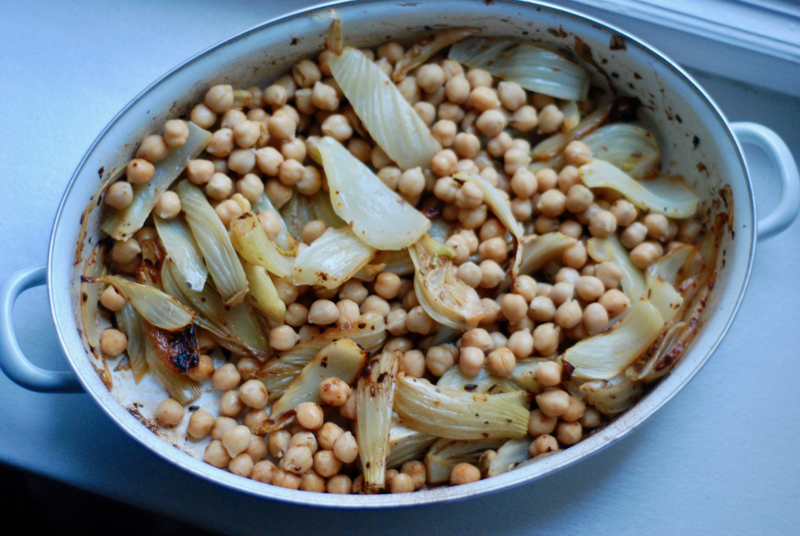
    Diana Henry Roasted Fennel and Tomato Salad with Chickpeas

    Of course, my culinary hero Diana Henry has a recipe for precisely this kind of elevated salad that used roasted fennel and tomatoes as the base, but pumps it up with all kinds of crazy flavorings, like harissa and preserved lemon and balsamic vinegar. It comes from her book How to Eat a Peach and is quite a stunner. The addition of chickpeas makes it a slightly more substantial kind of salad and fresh herbs make it beautiful – the kind of thing you can plonk on a buffet table and feel secretly smug about. And also consume rather obsessively. Which is the whole point. One more thing I love about it: the flavorings are so bold and fresh but actually this salad is essentially seasonless, so you can serve it in spring, when people are crazy for asparagus and rhubarb, and you can serve it in winter, when big roasts and stews prevail, and in both cases it just kind of works. Pretty neat.

    As luck would have it, I discovered a similar kind of special version of roasted broccoli dish that you need to know about (as in, my father literally said WHAT IS THIS WITCHCRAFT THIS IS THE BEST BROCCOLI I HAVE EVER EATEN when he had it), but I'll have to save it for next time. My camera, beloved and trusty documentation device on this blog since 2007, died a few weeks ago. Like, right in the middle of taking these photos, which is why I don't have a photo of the final dish (here's one from Diana, though). I thought it just needed a little repair work, but the camera shop guy told me it wasn't worth it – the repair would cost far more to do than the camera is worth. I was unexpectedly gutted, I have to admit. I loved that camera. I salvaged the lens and put it on my husband's camera, which is only a few years newer than mine was, but requires a whole new education. So bear with me while I figure that out. 

    Note: This post includes an affiliate link and I may earn a commission if you purchase through it, at no cost to you. I use affiliate links only for products I love and companies I trust. Thank you.

    Diana Henry's Roasted Tomato, Fennel and Chickpea Salad
    Adapted from How to Eat a Peach
    Serves 6

    For the tomatoes
    10 large plum tomatoes (or an equivalent amount of cherry tomatoes, left whole)
    3 tbsp olive oil
    1 tbsp balsamic vinegar
    1½ tbsp harissa
    2 tsp sugar
    Salt and freshly ground black pepper

    For the fennel
    2 large fennel bulbs
    Juice of ½ lemon
    2 garlic cloves, crushed
    ½ tsp fennel seeds, coarsely crushed in a mortar or left whole
    Generous pinch of chile flakes
    2½ tbsp olive oil
    400g can of chickpeas, drained and rinsed

    For the dressing
    2 small preserved lemons
    2 tsp juice from the lemon jar
    2 tbsp white wine vinegar
    1½ tbsp runny honey
    5 tbsp olive oil
    4 tbsp chopped parsley

    1. Preheat the oven to 190°C (375 F). Halve the tomatoes lengthwise and lay in a single layer in a roasting pan or ovenproof dish. Leave whole if using cherry tomatoes. Mix the olive oil, balsamic vinegar and harissa and pour this over the tomatoes, tossing to coat well, then turn the tomatoes cut sides up. Sprinkle with the sugar and season.

    2. Quarter the fennel bulbs, cut off the stalks and remove any coarse outer leaves. Pull off any tender fronds (reserve these) and cut each piece of fennel into 2.5cm thick wedges, keeping them intact at the base Add the lemon juice, garlic, fennel seeds, chile and olive oil, then season and turn everything over with your hands. Spread out the fennel in a second roasting tin and cover tightly with foil.

    3. Put both trays in the oven. Roast the fennel for 25-30 minutes, until tender (the undersides should be pale gold), then remove the foil and roast for another 5-10 minutes, or until soft, golden and slightly charred. Roast the tomatoes for 35-40 minutes, or until caramelized in patches and slightly shrunken. Stir the chickpeas into the fennel and taste for seasoning. Leave both to cool to room temperature.

    4. Now make the dressing. Discard the flesh from the preserved lemons and dice the rind. Whisk the preserved lemon juice with the wine vinegar, honey and olive oil, season and add the lemon rind and parsley. Taste for seasoning and sweet-sour balance.

    5. Arrange the fennel, chickpeas and tomatoes on a platter, adding the juices from the roasting tins; there might be quite a bit from the tomatoes. Scatter any fennel fronds you reserved over the top. Spoon on the dressing. (Leftover dressing can be used on other salads or to zhuzz up mayo for chicken or tuna salad.)
  • IMG_8622

    Here's a funny-well-not-really anecdote for you:

    Our morning routine is very rushed. Hugo has to be up by 6:10 at the latest to have enough time to get dressed, eat breakfast, brush his teeth and get out the door (with shoes, jacket and scarf on, preferably) by 6:55 to catch the school bus. While the boys have their breakfast, their dad's showering and getting dressed (he has to leave at the same time Hugo does and has a nearly 2-hour commute each way), I'm chatting with them, packing Hugo's snack box and pounding down some kind of hot drink to keep from falling over.

    Hugo's favorite weekday breakfast are toasted English muffins with peanut butter and jam. We don't always have English muffins around, and on those days, he's happy enough to settle for whatever bread we do have (it's usually some kind of dark German rye thing), as long as it's spread with PB & J. (Occasionally, he will decide it's butter instead of PB that he wants. That is fine!) Bruno's favorite breakfast is oatmeal with frozen blueberries. That child will plow through an adult portion first thing, then basically refuse to eat more than a bite of this and that at lunch and dinner. Small mercies.

    Now, this morning, since there were no English muffins, I decided to make oatmeal for both boys. I do have to grudgingly admit that I sort of had an inkling (oh, ho ho ho) there was going to be some kind of pushback (ha ha haaa), so I pumped up the oatmeal with chopped apples and cinnamon and brown sugar (which I usually never add), added frozen blueberries for good measure, even drizzled the top with maple syrup. All their favorite things! What lucky boys! They were definitely going to gobble this up, weren't they? I ignored my misgivings, dished it up, place the bowls on the table and…then…

    Both children contemplated their breakfast. Hugo made a face and asked me where his English muffin was. "There are none. This is your breakfast today!" I grinned in what I hoped was an encouraging way, but I suspect was slightly more maniacal. Who knows; I was still feeling pretty chipper in that moment. You know, pride cometh before a fall and all that. I mean, Hugo used to love oatmeal with blueberries, just like his baby brother! Two years ago, yeah, but still! What could go wrong?

    He took a tentative bite, while Bruno dug in briefly. Then Hugo put down his spoon and refused to eat anymore. Bruno watched and followed suit. And then my head exploded. Parenthood! Ain't it a kick in the head?

    IMG_8496

    The reason I'm telling you this is because I feel like the recipe I actually want to share today is exactly the same kind of thing as that lovely oatmeal: on the face of it absolutely harmless and tasty, yet still a total minefield waiting to happen. Nevertheless, I promise you that you will want these little ricotta-spinach frittatine for your back pocket. Even if your crazy children won't eat them, YOU will. And you can bring them to any school buffet, bake sale, book club potluck, WHATEVER, and they'll be the first thing eaten and grown-ups will pester you for the recipe. Ask me how I know.

    The recipe comes from my beloved Catherine Newman, who writes a column about low-carb recipes for diaTribe.org, which is a website for people with diabetes, which I do not have, but Catherine's recipes are always very good and also family-friendly so I follow her everywhere she goes and cook almost anything she tells me to. Especially these mini cheese-and-vegetable frittatine.

    The frittatine are made with eggs, a lot of grated cheese, ricotta and some vegetables and herbs. I've used spinach and broccoli, both to rave reviews. I've used grated Cheddar and grated Gouda, both to rave reviews. What I'm trying to say is that they are very flexible things. They're easy to make, bake up cute in muffin tins and store well in the fridge. I love how portable they are and how much flavor is packed into each little round. I use less ricotta and cheese than Catherine does, but to no ill-effect. These are versatile and easy and I love them, yes, I do.

    The first time I made them, they were for a school buffet, but I gave the first two to Hugo and Bruno to see if they liked them. I was pretty sure they would! Spoiler alert: They did not. Fair enough. Luckily, I thought they were scrumptious. And at the school buffet, they were gone in minutes. Vindication! A pathetic one, but still. My sense is that if your children like cheese and scrambled eggs, there's a good chance they'll like them. But they might not. In that case, try to be better than me and just appreciate the fact that you now have a batch of delicious cheesy vegetable egg bites for your breakfast all week.

    Off to buy more English muffins, maybe two packages, now.

    Catherine Newman's Ricotta and Spinach Frittatine
    Makes 12 mini frittatine
    Adapted from diaTribe.org

    3 tablespoons olive oil
    1 small onion, chopped
    1 garlic clove, minced
    3 eggs
    250 grams (8.8 ounces) whole-milk ricotta
    1 heaping cup grated cheddar, gouda or mozzarella
    1/3 cup freshly grated parmesan
    3 cups chopped baby spinach (around 6 ounces) or equal amount of steamed, chopped broccoli or frozen spinach
    1-2 tablespoons finely chopped fresh herbs (like parsley, chives, basil or a lesser amount of thyme or marjoram)
    3/4 teaspoon kosher salt
    Black pepper

    1. Heat the oven to 350 and grease the 12 wells of a standard muffin tin.

    2. Heat the oil in a small skillet over medium heat and sauté the onion until soft and browning, about 10 minutes. Add the garlic, cook another minute, then add the spinach and cook until just wilted, about 1 minute.

    3. In a medium bowl, whisk the eggs, then add the cheeses and stir. Add the vegetables, the herbs, and the salt and pepper, and stir well.

    4. Divide the mixture in the muffin cups and bake 15-20 minutes until puffed, deeply golden, and set. Eat right away or refrigerate.

  • Diana Henry's Baked Chicken with Mustard and Herbs

    Thank you all so much for your incredibly warm and lovely messages! It's so nice to be back and know that all of you are out there still reading.

    Today I'm going to tell you about how I deal with the daily grind of WTF AM I MAKING FOR DINNER TONIGHT that makes even the most eager cook a little, shall we say, itchy. I don't know how many of you here are also following me on Instagram, where I mentioned this new way of meal planning back in January, so forgive me if this is a little repetitive, but I really do find it such a helpful way of working through the constant and unrelenting chore of having dinner on the table every evening that perhaps it can be useful to a few of you too.

    Here's what I do: rather than sit down and write down a whole menu for each day of the week when meal planning (which was time consuming and eventually felt very…uninteresting and difficult), I decided to assign specifically themed meals to specific days of the week in a much looser fashion. Like this: On Mondays, we eat pasta. On Tuesdays, it's beans. Wednesdays are for chicken. Thursdays are soups or stews. Fridays is for fish. (Weekends are a free-for-all.) What this allows me is much more flexibility and also more rigidity at the same time, but in a way that feels both freeing and safe. Do you know what I mean?

    Since Mondays are for pasta, it means that the week starts out very gently. All I need to do is make a pot of tomato sauce, which I could do in my sleep, and some green vegetable (sometimes, yes, it's just a sliced cucumber because I am only human, other times it's steamed broccoli or boiled chard). Dinner is very easy and almost always drama-free, because the boys both eat noodles and everyone's happy. It allows me to start the week off feeling somewhat capable and in control.

    Tuesday is bean day and I usually end up making some kind of simple bean situation in the Instant Pot. This recipe (using Rancho Gordo cranberry beans, for example!) is wonderful and Bruno will eat at least three helpings of it. WHUT. I want to marry that recipe. The boys eat it plain or with a bit of bread and Hugo will have some avocado with it. We top it with cilantro and hot sauce and pickled onions and avocado. Sometimes, though, life is too crazy even for the Instant Pot and then I make a red or yellow lentil soup, which takes about 20 minutes and while Hugo will bellyache about it, both kids will usually eat it. (Obviously, it helps if I slice a hot dog into the soup, but I don't always do that because I don't want them to get used to hot dogs on the regular because I am MEAN and also sort of stupid seeing as we live in Germany and they already are used to eating them all the time everywhere gaaaaah.)

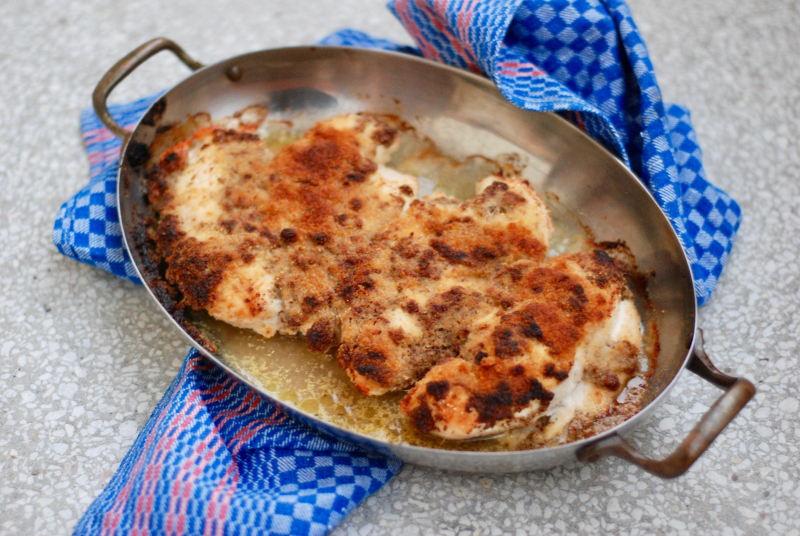
    Wednesday is Chicken Day. Sometimes I make this Korean chicken, sometimes I make breaded cutlets (but let's be honest, rarely, because that set-up is way too time-consuming and annoying at this point in my life – I mean, keep in mind that unless there's a second adult here, I can't set foot in the kitchen without Bruno behind me dismantling literally everything in sight or physically hanging off of me or Hugo asking if he is finally allowed to watch something NO YOU CANNOT AND IF YOU ASK ME ONE MORE TIME CHILD I SWEAR TO…), but recently I discovered Diana Henry's baked chicken and it is so delicious and so easy and so…satisfying and impressive and perfect that it makes me happy every time I make it.

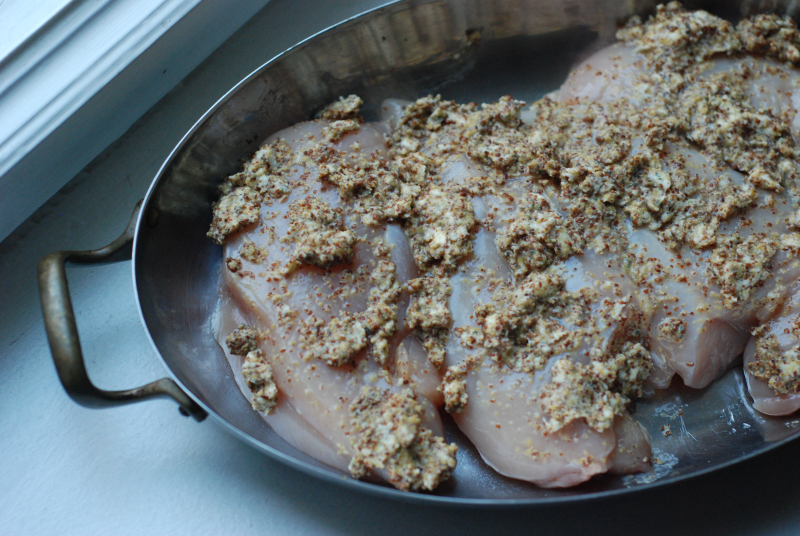
    You make a soft little mixture of Dijon mustard, butter and herbs (she calls for tarragon, but I end up usually just using a bit of dried sage or nothing at all), then squash this all over a bunch of chicken thighs. Then you sprinkle breadcrumbs on top and stick it in the oven until browned and crisp. That's it. The crispy top pleases the children, the herbs and mustard make it sophisticated enough to not give you an existential crisis and it's on the table (from start to finish!) in 40 minutes. (The active time of 5 minutes is fast enough that I can trick the kids into leaving me alone while I do it.) SO GOOD.

    It's one of only two recipes actually printed out and pasted to my refrigerator, that's how much I love it. (The other one is for this, but with yogurt/milk instead of buttermilk.)

    The original recipe specifies chicken thighs (skinless, but bone-in) and it is definitely the way to go. HOWEVER, because of course, I have also tried this with skinless, boneless chicken breasts and while it's not nearly as juicy and toothsome and rich, it's totally fine. Just reduce the cooking time to 20 minutes and then use the broiler for 3 minutes at the end to brown and crisp the breadcrumbs. (The photos in this post are of the chicken breasts.)

    The recipe comes from Diana's chicken cookbook and is definitely, positively, absolutely worth the price of the book. For some godforsaken reason, I only own this book on my Kindle, which drives me fucking bananas, because if I want to cook anything else from it, I have to keep re-entering my password and peering at the phone and then my children see me on the phone and then they WANT the phone and my fingers are dirty and stop screaming and oh my god no you can't have a snack and you can't have the phone and please go play and ten more minutes and I hate everything and I really don't understand why cookbooks even come in E-book form, it's so dumb.

    Mustard butter

    Thursdays are soup/stew days, which means that sometimes we eat some sort of bean stew twice a week, but there are worse things, yes? Usually it's some sort of puréed vegetable soup and bread. Thank goodness for German bread, which is about 80% of what Bruno eats in total, period. And sometimes, depending on just how much of a surrender week it is, it's the day the boys get pastina in broth (as in bouillon cube or Better Than Bouillon) and I fantasize about being capable of drinking three glasses of wine at dinner (I can't even do one glass, just so you know, which seems really unfair).

    Fridays are fish (and frozen peas). Either I stick a bunch of frozen fillets in tomato sauce and serve over rice from the rice cooker, or boiled potatoes if I'm feeling charitable, or it's fish sticks. And then my husband roots around in the pantry looking for the instant mashed potatoes because you can't possibly have one without the other and I decide that instead of dinner, I'm having a bath and listening to a podcast and no, please don't follow me, in fact, forget I even exist, someone else is in charge now good night and good luck.

    Please, PLEASE, you well-meaning, lovely, wonderful people, do not tell me how quickly this phase will be over and that I'll miss it one day. PLEASE. I am fully aware of that. As in every day. It sometimes keeps me up at night! It also does not usually make me feel better in the moment. You know? Sometimes you just have to live it and be frustrated and tired and happy when the kids are finally asleep and that's okay too.

    Note: This post includes affiliate links and I may earn a commission if you purchase through them, at no cost to you. I use affiliate links only for products I love and companies I trust. Thank you.

    Diana Henry's Baked Chicken with Dijon Mustard and Herbs
    Serves 4
    Adapted from A Bird in the Hand

    1/4 cup Dijon mustard
    A couple of pinches of chopped fresh herbs (like tarragon, thyme, oregano, basil, what have you)
    1 3/4 tablespoons unsalted butter, softened
    4 skinless, bone-in chicken thighs
    Salt and pepper
    2-3 tbsp bread crumbs (from stale, not fresh, bread)

    1. Preheat the oven to 425F. Mash the Dijon mustard with the tarragon and butter until combined. Put the chicken into a roasting pan (or a baking dish) and brush or use your fingers to spread the mustard mixture onto the chicken. Season, then press on the bread crumbs.

    2. Roast in the hot oven for 35 minutes. The chicken should be cooked through. Check this by piercing the flesh near the bone, with the tip of a sharp knife, in one of the larger pieces. The juices should run clear with no trace of pink. If not, cook for a few minutes more then test again. The top should be a lovely golden color.

    3. Serve immediately with the cooking juices that have gathered around the chicken.

  • Dinner A Love Story's Asian Slaw

    It was my father's birthday the other day and to celebrate, I used my Instant Pot to make the Korean-flavored brisket from Dinner in an Instant and it was astonishingly delicious and done in less than an afternoon. What?! (Yes, I am still in that annoying phase of Instant Pot ownership where I cannot get over how fast it is. People, meltingly tender, practically spoonable brisket! In less than three hours! I mean!) (I actually used Tafelspitz, because my butcher didn't have any Rinderbrust that day, in case any of you are in Germany and want to make this too, and it was great.)

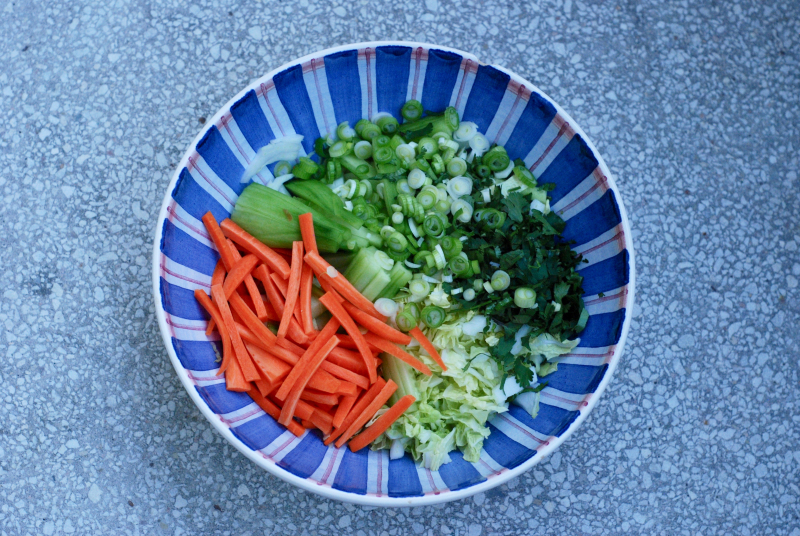
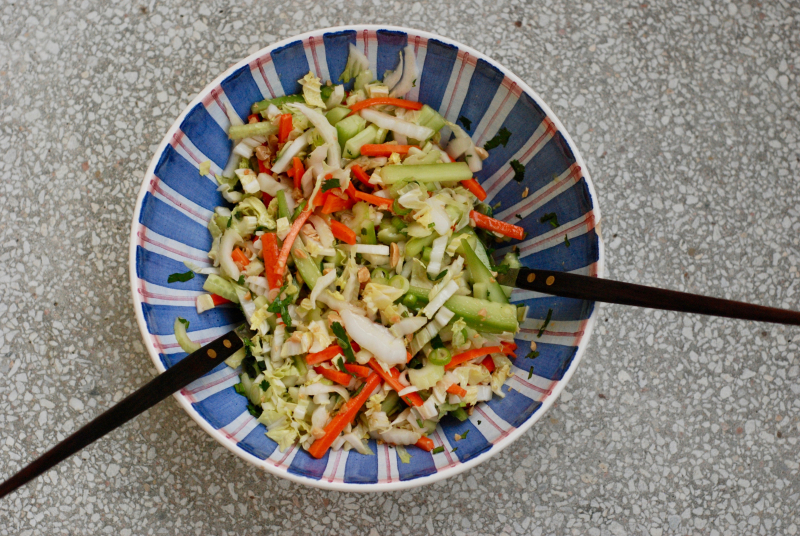
    To round out the meal, I made white rice and this slaw from Dinner: A Love Story, which isn't Korean per se, but Jenny also serves it with something called "Korean Tacos" so I figured it would do as a low-energy vegetable side and you might not believe it if you had only tasted the ambrosial brisket, but this slaw basically stole the show. Now I know why Jenny's Andy said their Korean taco meal really "was all about the slaw." This slaw is perfect.

    It's fresh and crisp and perfectly seasoned, with rice vinegar and fish sauce and lime, and just the kind of thing you don't want to stop crunching your way through. You'll have to restrain yourself from spooning up the juices left in the empty bowl. I added chopped salted peanuts, because I correctly guessed that Hugo might be slightly more inclined to eat it if there were peanuts to fish out, and I urge you to do the same. Using Napa cabbage means the slicing is a cinch and you don't need to massage anything or make it in advance. You just dump everything in a bowl and go to town. (I made this two nights in a row and added thinly sliced celery to the slaw the second night, which I also highly recommend!) The cilantro is non-negotiable. WHAAAAAT.

    I feel like calling this Perfect Slaw might confuse you because it's not cole slaw. But calling it Asian Slaw feels a little lazy? Vietnamese Slaw? Napa Slaw? I don't know. These are the kinds of things I waste time thinking about. Just bookmark it, commit it to memory (I already have) and soon it won't matter at all what it's called. Or you'll just be calling it Perfect Slaw too.

    Jenny Rosenstrach's Asian Slaw

    Note: This post includes an affiliate link and I may earn a commission if you purchase through it, at no cost to you. I use affiliate links only for products I love and companies I trust. Thank you.

    Jenny Rosenstrach's Perfect Slaw
    Adapted from Dinner: A Love Story
    Note: The size of Napa cabbage is a little subjective, so depending on your head of cabbage, you may need to increase the vinegar and oil to 1/3 cup each.

    Slaw
    1/2 small head Napa cabbage, shredded
    1/2 cup julienned carrots
    1/2 cup julienned cucumber
    1/2 bunch scallions (white and light green parts only), thinly sliced
    2 celery stalks, thinly sliced (optional)
    Handful cilantro or mint (chopped), or both
    1/3 cup salted roasted peanuts, chopped

    Dressing
    1/4 cup rice wine vinegar
    2 tablespoons fish sauce
    Squeeze of fresh lime juice
    Pinch brown sugar
    1/4 cup neutral oil

    1. Place all slaw ingredients except for the peanuts in a salad bowl.

    2. In a separate bowl, whisk together dressing ingredients, then toss with the slaw.

    3. Top with the peanuts.

  • Melissa Clark Pork and Black Bean Chili

    Pssst…

    It's me.

    I know. It's been, like, 8 months.

    (Insert chagrined grin emoji.)

    I nearly shut this thing down. No, really. But I couldn't pull the trigger! So here I am again. I missed you guys.

    What's been going on? Well, Bruno turned two. Hugo learned how to read and write. In many ways, things are just fine. In other ways, though, the past year has been really difficult. Just life, you know? Nothing spectacular or out-of-the-ordinary. Mothering two young children, noodling forward in a marriage, trying to figure out my career, dealing with money issues…but to top it all off, I've recently been diagnosed with a string of stress-related health problems. I knew something was off last year already, but couldn't put my finger on it. This year, so far, my body has been telling me in no uncertain terms to spend a little more time saying no, putting myself first and finding peace.

    Easier said than done! yelled a million mothers in exasperation as she skulked off to a corner to use her phone to meditate. (Insert eye roll emoji.)

    It's been scary and humbling and also kind of nuts to witness my body manifest a lot of the crap that I do not do a good job of managing. And I'm kind of overwhelmed at how much willpower it takes to take care of myself. I feel like I'm a total champ at taking care of other people, so it's doubly weird to realize that I'm really failing at me. I'm sort of embarrassed by that. I'm also embarrassed about this paragraph! Let's move on.

    Feeding the children has pretty much become a shit show. Hugo has the appetite of a small bird. Bruno is incredibly picky. (The only green thing he eats are spicy olives.) (THE ONLY GREEN THING.) (SPICY.) (MOTHERLOVING.) (OLIVES.) Every once in a blue moon, I throw my hands up and make alphabet noodle soup with a bouillon cube because it's Hugo's favorite thing to eat (insert exploding head emoji) and because Bruno will usually eat it too. But most of the time, I cook the food I want to eat (within reason, people) and then there's a lot of whining and uneaten food and smoke comes out of my ears and no matter what I've made, the meal always ends with Bruno eating chunks of Parmesan cheese.

    Because, surrender!

    (I read that in a lovely cookbook called Repertoire by Jessica Battilana – in a headnote about newborns and surviving and fattoush salad – last spring and spontaneously burst into tears because it was so profound and wise and right and also WTF why are children so difficult? I sometimes debate going around my house and taping pieces of paper with SURRENDER written on them to the walls. You know, just to remind me.)

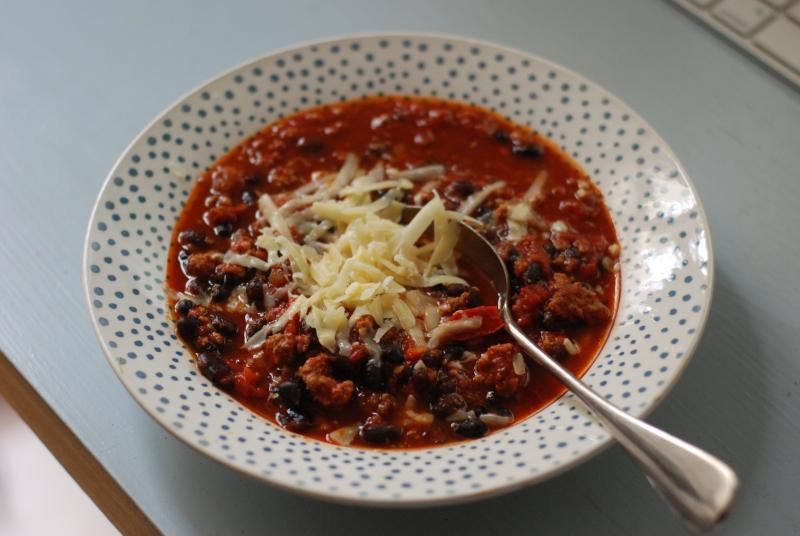
    Last year, I also discovered this chili from Melissa Clark's most recent cookbook called DINNER: Changing the Game (via Whoorl, but I can't remember in what context) and there were a few brief, shining evenings in which the children and Max and I all enjoyed eating it. Since then, Bruno has decided that ground meat is for the dogs and Hugo hates stew, but Max and I continue to think that this is an exceptionally delicious chili. (It's also a delight to make, which seems important if you derive some modicum joy from cooking, as most of us here do? I hope?) It has sage and beer in it, plus cheddar on top, and it's just really satisfying and wonderful. I'd call it my favorite chili.

    Note: This post includes affiliate links and I may earn a commission if you purchase through these links, at no cost to you. I use affiliate links only for products I truly love and companies I trust. Thank you.

    Melissa Clark's Pork and Black Bean Chili
    From Dinner: Changing the Game
    Serves 4 to 6

    2 tbsp olive oil
    1 large onion, diced
    1 red pepper, diced
    1 pound ground pork (or turkey)
    2 tsp kosher salt, plus more if needed
    1 tsp freshly ground black pepper
    2 tsp dried oregano
    1 tbsp minced fresh sage
    1 tbsp chili powder, plus more if needed
    2 minced garlic cloves
    1 28-ounce can diced tomatoes
    2 15-ounce cans black beans, drained and rinsed
    1/4 cup lager (like Negra Modelo)
    Grated cheddar or sour cream, for serving (optional)
    Lime wedges, for serving

    1. Heat the oil in a large pot over medium high heat. Add the onion and pepper; cook, stirring, until the vegetables have softened and lightly browned, about 7  minutes. Add the pork and cook, breaking it up with a wooden spoon, until it is cooked, about 7 minutes. Stir in the salt, pepper, oregano, sage, chili powder and garlic and cook for 1 minute.

    2. Add the tomatoes and their liquid, the black beans and the beer. Stir and bring the mixture to a boil. Then reduce the heat to medium-low and simmer until the mixture is slightly thickened, 30 to 40 minutes. Taste and add more salt and pepper if needed. Serve topped with grated cheese (or sour cream) and with the lime.

  • IMG_2028

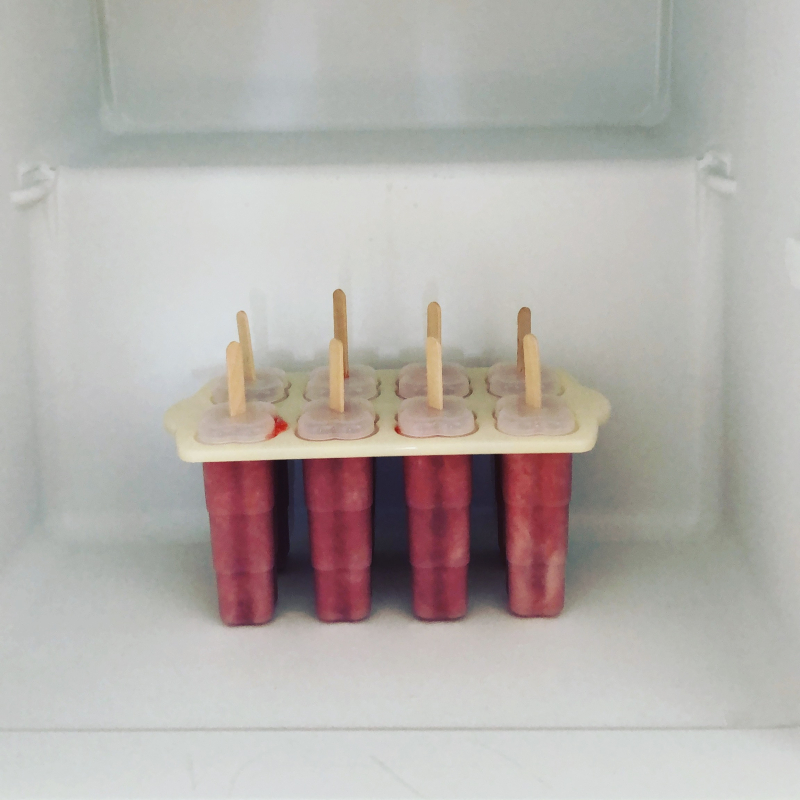
    Confession time: I have no less than SIX posts in the pipeline on this here olde time bloggue. Six! There is chili and muesli and cauliflower salad and eggplant parm and a million amazing new cookbooks to tell you about, but somehow the time, the time!, is never enough. So let's start small, shall we, with these delicious little popsicles that I made last week, after having an attack of the mom-guilt-blues and trying to come up with a fun after-school treat to delight my school kid.

    (Another confession: A parenting thing I'm really struggling with at the moment is self-doubt. Like, I wake up at 3:30 in the morning to pee, think about something I did/said/didn't do/whatever the day before with Hugo, then proceed to fall down an awful spiral of misery, self-doubt and recriminations that last until it's time to get up and get the day going with my little dudes. It's…not great. Does that happen to you? What's your biggest parenting challenge right now? Why are babies so much easier to parent than kids? Maybe don't answer that question? Are you also an insomniac whose entire night can be ruined by one errant thought? Let's commiserate, maybe we'll all feel better.) 

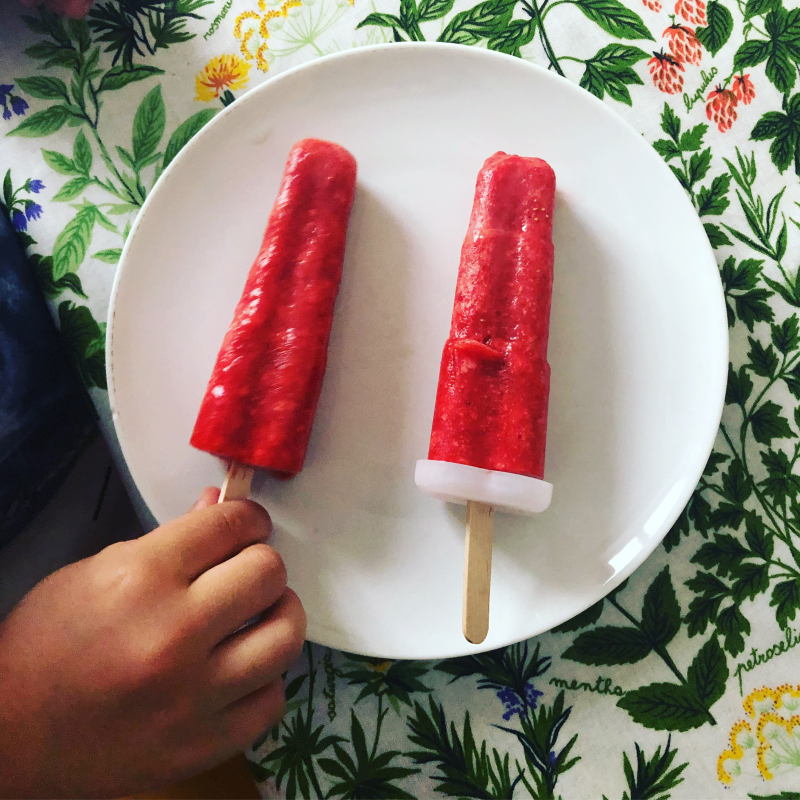
    The recipe comes from People's Pops by way of Catherine Newman, who loves their cookbook, and because everything she writes about turns out to be as delicious as she says it is, I went a little nuts looking up recipes for blackberry-yogurt pops and blueberry buttermilk and roasted plum pops (I mean!). Ultimately, because here strawberries are cheap and plentiful and fragrant as all get-out right now, I made these strawberries & cream popsicles. They were a cinch to make – just puree fresh strawberries with some lemon, vanilla and salt, combine it with simple syrup (which, because I once bought a pretty bottle of cane syrup for the label, I don't even do, I just pour this stuff in) and swirl in some cream – and they were indeed as delightful as they sound, especially because it's been heat-wave hot here lately and we're all constantly irritable and slightly damp with sweat and lightly spangled with playground sand.

    The best thing about homemade popsicles has to be the look on your kid's face when they get off the school bus, hangry and tired and wondering what annoyingly wholesome thing you've prepared for their snack and you say there are strawberry popsicles in the freezer. And that he can have two! (Spoiler alert: he couldn't finish two. That's okay. More for you.)

    IMG_2027

    Note: This post includes affiliate links and I may earn a commission if you purchase through these links, at no cost to you. I use affiliate links only for products I truly love and companies I trust. Thank you.

    Strawberries & Cream Popsicles
    Makes 8 to 10, depending on your mold
    Adapted from People's Pops

    2/3 cup granulated sugar
    2/3 cup water
    4 cups strawberries, hulled and coarsely chopped
    ¾ teaspoon vanilla
    Pinch of salt
    1 teaspoon lemon juice
    ¼ cup heavy cream

    1. Combine the water and sugar in a saucepan, and bring to a simmer over medium-high heat. Stir occasionally, until the sugar has dissolved. Remove the pan from the heat and set aside to cool.

    2. Puree the strawberries in a food processor (you should have about 2 cups of puree). Transfer the berries to a measuring pitcher with a spout and add ¾ cups of the cooled sugar mixture, vanilla, salt, and lemon juice. Stir to combine. Pour in the heavy cream; do not mix.

    3. Pour the mixture into your popsicle molds, leaving a bit of room at the top for expansion. Insert the sticks and freeze the popsicles until they are solid, 4-5 hours. Unmold the pops and transfer to a plastic bag for storage, or serve at once.

  • IMG_9361

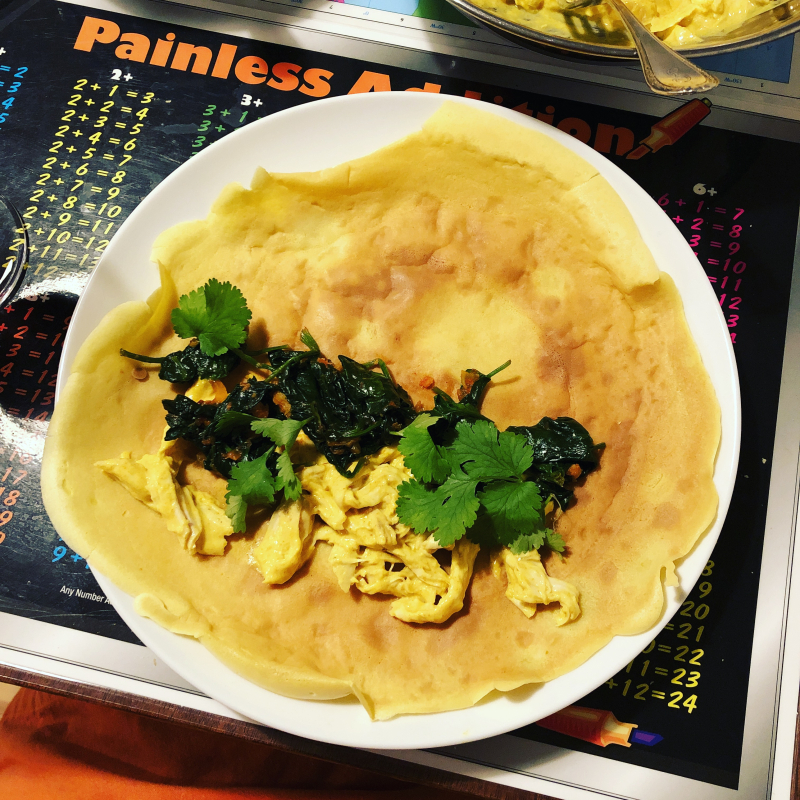
    I know. Just the name of this meal sounds fussy as all get out. But actually, it's simpler than you think. And you know what else it is? Fun. Also, delicious! Despite the multiple steps, I highly recommend it for your next eat-with-your-fingers meal. And it's fast enough that you could make it on a weeknight, especially if you're the kind of person who remembers to make the chicken salad the day before. (I am not this person yet, but I am constantly striving to become this person!)

    What the meal consists of are soft, floppy crêpe-style pancakes (flavored with cumin and turmeric, which gives them a Day-Glo hue), filled with coronation chicken salad (which is just boiled chicken mixed with yogurt, curry powder and mango chutney, essentially) and some sautéed spinach. Before eating, you add fresh cilantro, shredded coconut and an essential lime squeeze. Roll it up, eat it, done!

    Picky children may react suspiciously to the meal at first. If you let them fill their own pancake, from all the little bowls that you have set out containing the various elements of the filling, they might relent in their resistance somewhat. Maybe. Of course, letting them fill their own pancake means they may only eat the chicken salad and the pancake? But so be it! You will be so happy stuffing yourself that you won't even mind.

    (Some of these children may be heartened to know that the chicken salad contains no mayonnaise, only yogurt.

    (Maybe don't mention the mango chutney?)

    (While we're doing this, I should say that you could, arguably, even leave out the spinach entirely. I tried these with and without spinach and give you full permission to skip it.)

    (Good-bye.)

    Turmeric Pancakes with Coronation Chicken and Spinach
    Adapted from The Guardian
    Serves 4

    For the pancakes:
    300g all-purpose flour
    1½ teaspoon ground cumin
    1 teaspoon ground turmeric
    4 eggs
    Salt
    600ml whole milk
    Vegetable oil for the pan

    For the coronation chicken:
    4 cooked chicken breasts, skinned and finely shredded (400g net weight)
    200g plain whole-milk yogurt
    1½ teaspoon medium curry powder
    3 tablespoons mango chutney
    ½ teaspoon ground turmeric
    1 tablespoon lime juice

    For the spinach:
    40g unsalted butter, or ghee
    1 large onion, peeled and finely chopped
    2 garlic cloves, peeled and crushed
    1.5cm piece ginger, peeled and finely chopped
    1 tbsp tomato paste
    300g baby spinach

    To serve:
    1 lime, cut into 6 wedges
    A handful of fresh cilantro stalks, optional
    30g dried shredded coconut, optional
    30g store-bought fried onions, optional

    1. Start with the pancake batter. In a large bowl, mix the flour, cumin, turmeric, eggs and a teaspoon of salt. Add a little milk and whisk to a smooth, thick paste. Slowly whisk in the rest of the milk, until you have a smooth, fairly thick batter, then refrigerate for up to 8 hours.

    2. For the coronation chicken: In a large bowl mix the shredded chicken, yogurt, curry powder, chutney, turmeric, lime juice and a teaspoon of salt, then cover with plastic wrap and refrigerate for up to 8 hours before serving. Remove from the fridge 30 minutes before serving, and stir in the cilantro.

    3. For the greens, on a medium-high flame, melt the butter in a large saute pan for which you have a lid. Once it starts bubbling, add the onion and fry for five to six minutes, stirring frequently, until soft and translucent. Add the garlic, ginger, tomato paste and a good pinch of salt, and fry for a minute more. Add the spinach, cover the pan and cook for a few minutes, stirring regularly, until most of the water has evaporated and the spinach has wilted/cooked. Reheat before serving, or leave to cool to room temperature.

    4. When you're ready to eat: Drizzle some vegetable or olive oil in a large nonstick frying pan on a medium-high heat. When it's hot, add three to four tablespoons of batter and swirl and shake the pan so the batter spreads out evenly over the base in a round. Fry for a minute or two on each side, until golden brown (if the pan gets too hot, turn down the heat to medium). Place the cooked pancake in a warm oven while you repeat with the remaining batter. You should end up with approximately 12 pancakes.

    5. To serve, put the chicken and spinach in separate bowls on the table. Place a pancake on each plate, then add a few spoonfuls of chicken and spinach. Top with some fresh cilantro, dried coconut and fried onions, if using, then squeeze some lime juice over. Roll up the pancake and eat.

  • Last week, I took a little break from my everyday life. I packed a tote bag full of old New Yorker issues, some eye drops and a snack, snuck out of the house before anyone was awake, got in a cab and went to the airport. Then I flew to…Milan.

    IMG_0533

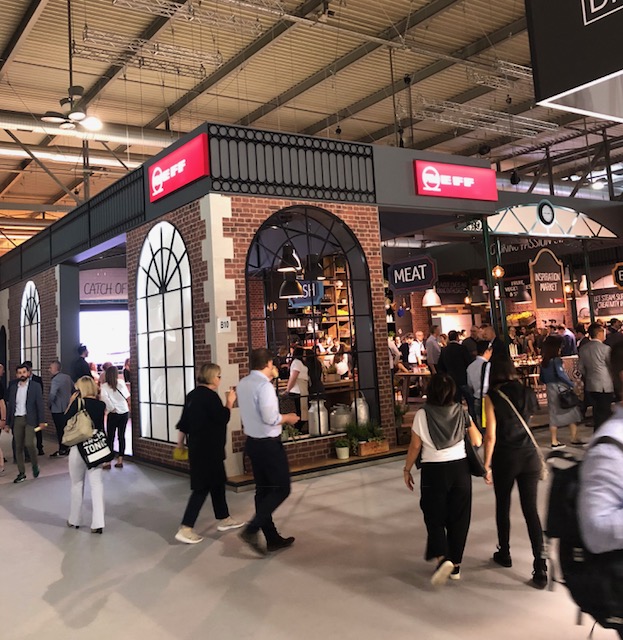
    I was in Milan for the Salone del Mobile, the largest furniture trade fair in the entire world, and specifically to visit the EuroCucina – an exhibition hall full of kitchen companies showcasing their latest developments (mostly technological developments, though I couldn't help ogling a lush Dolce & Gabbana run of Smeg refrigerators or a 6-burner turquoise lacquered La Cornue stove situation, you know, for your run-of-the-mill country estate).

    My host was Neff, the kitchen company that I've done some work with in the past. At their stand, a cozier, homier one than most of the others, which were outfitted to look far more cutting edge and futuristic, fresh fruits and vegetables were part of the display, as were big sacks of dry goods and gorgeously hued piles of spices and herbs. Sonia Peronaci, an Italian blogger who founded the country's largest cooking website, Giallo Zafferano (which my mom uses on the regular), held down the fort there with a slew of cooking demos.

    IMG_0531

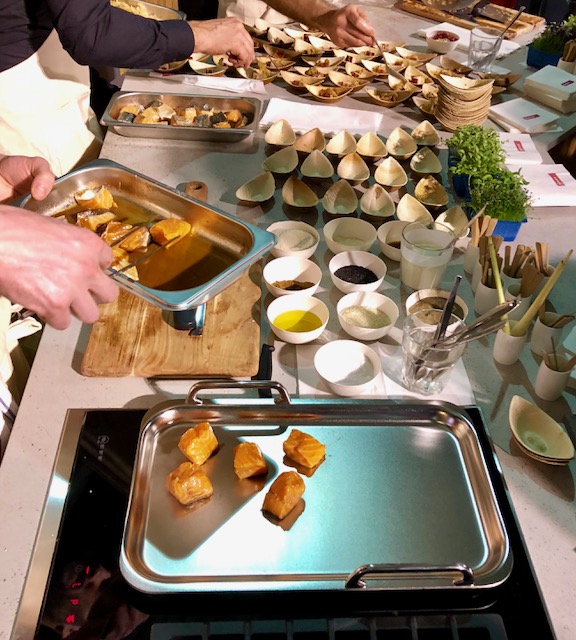
    I had the pleasure of joining Sonia for a demo and we cooked side-by-side, making pork belly and salmon that was then devoured in about 27 seconds flat by the gathering crowd. Before the food was gobbled up, though, it was plated on a series of gorgeous handmade plates by Reiko Kaneko.

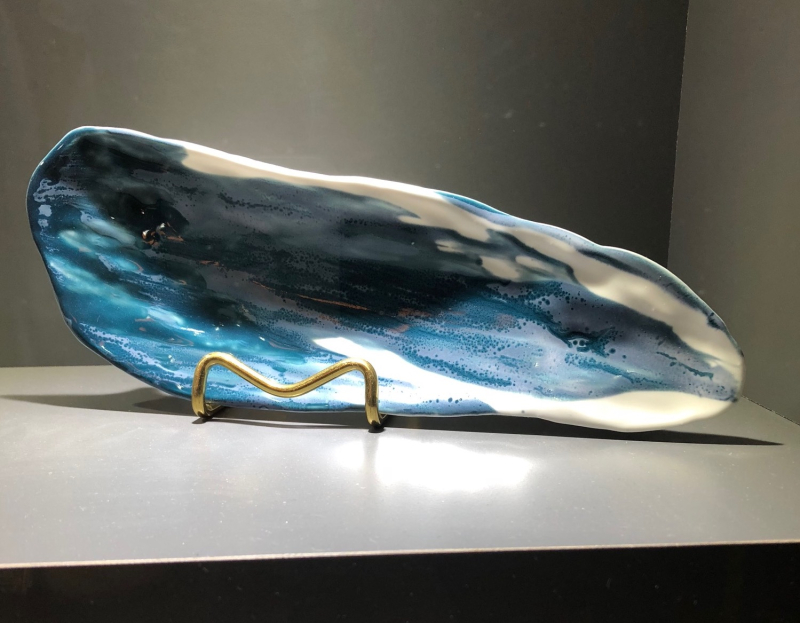
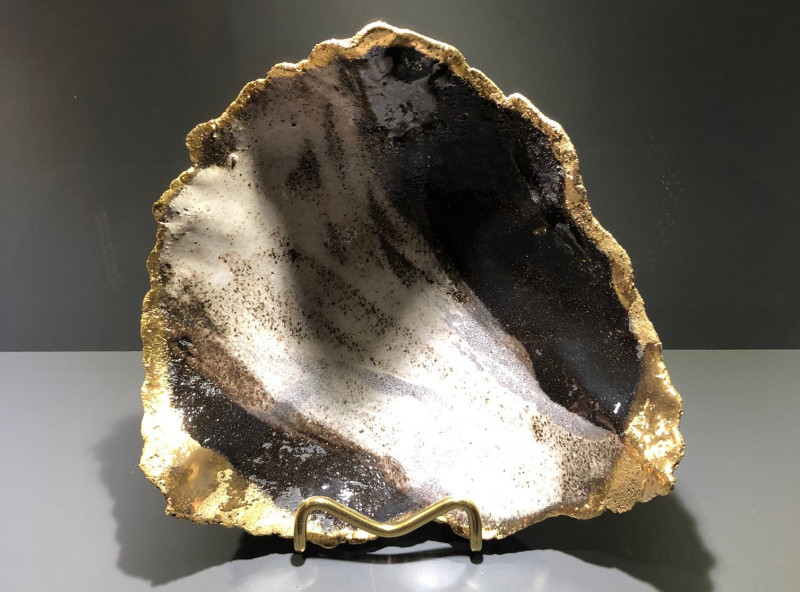
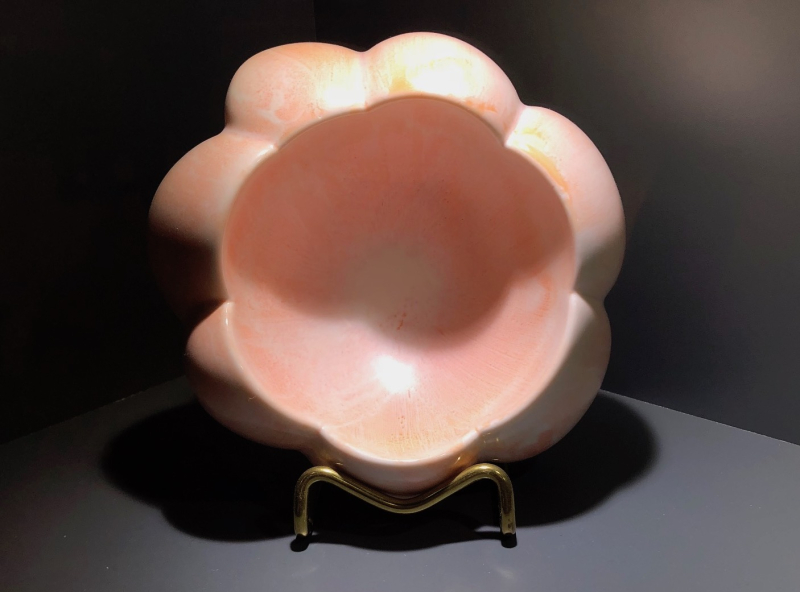
    Kaneko is a Central Saint Martins trained ceramicist whom Neff commissioned to make a series of plates inspired by the "science of gastrophysics." Kaneko worked together with Professor Charles Spence, an expert in multisensory perception, specifically sensory perception of food, to create the three plates. One is for starters, one for mains and one is a dessert vessel. Their colors, textures and shapes elevate the various flavor profiles of the foods they are meant to showcase.

    So, for example, the starter plate, oblong and unevenly ridged, enhances the flavor of salty, savory food, specifically seafood. The plate for mains is slightly more bowl-like, with a lacquered surface and higher sides, is meant to enhance the flavor of spicy foods. The round dessert bowl in soft pink increases the perception of sweetness and fruitiness in desserts, especially those made with berries.

    IMG_0479
    IMG_0478
    IMG_0480
    After my demo was complete, I got to have lunch at one of the fair's staff cafeterias, hidden up on the top of the building. Since we were in Italy, the cafeteria food was – no surprise – pretty amazing. Think tiny meatballs in tomato sauce, delicious boiled broccoli (I know!), possibly the best white lasagna I've ever had. Even the tangerine I pilfered from the fruit bowl for later was perfect. Oh, Italy!

    I took a nice, long wander of the Salone, marveled at the supreme elegance of the men and women all around me, then made my way back to the airport and, later still, my delicious boys asleep in their beds. What a day!

    This post was sponsored by Neff.

  • IMG_0529

    Reader! How are you? How’s the weather where you are? Here in Berlin, spring has sprung. The breezes are warm, the trees are blooming (the creamy magnolias are already on their way out, in fact, sob, but the frothy cherry blossoms are still in full glory), the markets are stuffed with fragrant strawberries and fat white asparagus. I have put away my heavy wool sweaters and warm coats and am swanning around in t-shirts and sockless feet. It is glorious.

    My little white baby Bruno even has his very first sunburn on the tops of his deliciously fat feet. I am fully and miserably responsible. I plead ignorance: my skin color has me regularly mistaken for being South Asian so I have a relatively “relaxed” attitude about sunscreen when not on the beach, yet I seem to have given birth to the whitest baby in Germany, poor thing. The other day, we were at the playground in the what felt like not-even-that-hot-for-crying-out-loud sunshine, yadda yadda yadda, before I knew it, Bruno had red feet. Gah. So I am doing penance now by stocking up on baby sunscreen and already looking forward to the pitying looks that he will be getting from the mahogany-skinned Italians on the beach this summer.

    As I type, I have a plastic bag filled with strawberries sitting on the chair next to me. These aren’t the best strawberries, yet, but they smell delicious and between Hugo and me, I anticipate them lasting until, oh, tomorrow morning at best. (Bruno, so far, refuses to eat any berry at all. Weirdo. Takes after his father.)

    Anyway, I’m telling you this because I feel a little funny about what I’m going to do next. Which is: blog about a wintertime dessert made with roasted apples. But is so wonderful and delicious that you simply must know about it. And since I was in the depths of new-baby-hood when I first discovered it (and made it obsessively for every special meal we were invited to for a couple of months), I didn’t write about it when it was topical and in-season. Instead I’m doing so now when you could probably care less about roasted apples and will immediately close the browser window and tell me to go jump in a lake. That’s fine! I’d do the same! Forgive me!

    But for the three of you who don’t feel that way (or for those of you on the other side of the world, or in Boston, where it was still SNOWING yesterday for the love of Pete), this is for you.

    Now, imagine:

    Whipped cream.

    Greek yogurt.

    Crushed meringues.

    Roasted apples.

    Toasted hazelnuts.


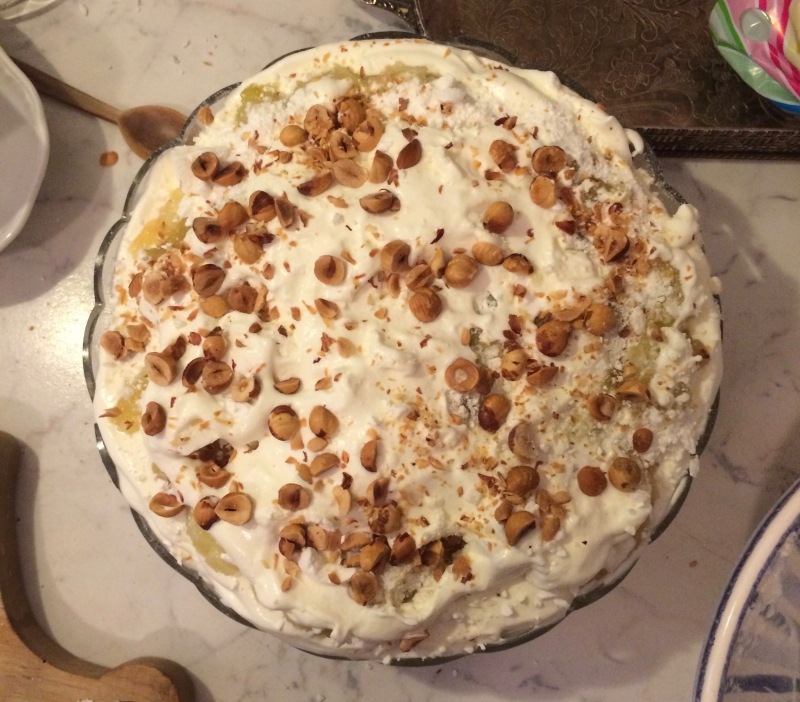
    All layered together in a beautiful serving dish and spooned out in such a way that each bite contains a bit of creamy, crunchy, roasty, toasty, juicy wonderfulness. The recipe comes from Diana Henry’s reboot of Simple and is, indeed, simple. All you have to actually cook are the roasted apples (does toasting hazelnuts even count as cooking?). The rest is whipping cream and bashing up store-bought meringues and drizzling maple syrup (and, uh, toasting hazelnuts – don’t you even dare to try and skip this step as untoasted hazelnuts are the devil’s work, as everyone knows).

    It is, of course, a wintry riff on Eton mess, traditionally made with fresh strawberries in spring and a glorious dessert in its own right. (Though I never really get beyond just stuffing fresh strawberries unadorned into my craw when they're local and sweet and cheap and sold on every street corner.) Somehow, with the meringues and yogurt and apples, it manages to be a pretty light dessert, the kind you're happy to spoon up after a big meal. (I was going to write, "like Christmas" after that, but it turns out that even I, blogger of apple desserts in springtime, can't bring myself to write about the holiday that shall not be named, so you'll just have to infer it.)

    And with that, dear reader, I'm off to buy some fresh rhubarb. At the rate I'm going, I'll blog about what I do with it just around Thanksgiving. Ha!

    Note: This post includes affiliate links and I may earn a commission if you purchase through these links, at no cost to you. I use affiliate links only for products I truly love and companies I trust. Thank you.

    Roast Apple and Maple Eton Mess
    Adapted from Simple
    Serves 6

    1.5 lbs cooking apples, peeled, cored and halved
    1/4 cup light brown sugar
    1/3 cup maple syrup, divided, plus more to serve, optional
    3 1/2 tablespoons hazelnuts
    1 cup whipping cream
    1/3 cup Greek yogurt
    4 1/4 ounces meringues, coarsely broken up

    1. Preheat the oven to 400F. Place the apples in a roasting pan and toss with the brown sugar. Drizzle 3 tablespoons water over the apples. Roast for 15 to 20 minutes, until the fruit is tender. Drizzle 2-3 tablespoons maple syrup over the apples and let cool.

    2. Toast the hazelnuts in a dry pan over medium heat, stirring frequently, until they smell toasty and delicious. Let cool and coarsely chop.

    3. If necessary, lightly crush the apples with a fork – but take care not to make applesauce out of them.

    4. Whip the cream until it holds its shape, then fold in the Greek yogurt and remaining maple syrup.

    5. Layer the apples, cream, hazelnuts and meringue in individual glass dishes or one larger serving dish. If you like, you can drizzle additional maple syrup as you go (I never do). Finish with a layer of cream and a sprinkling of hazelnuts. Serve immediately (otherwise the meringues soften).

  • DSC_1482

    One of the most underrated cookbooks of the past couple of years is, in my opinion, Aleksandra Crapanzano's The London Cookbook. a wide-ranging collection of recipes from London's best restaurants, pubs, cafés and holes-in-the-wall. I got a copy from my editor (the writer and I share a publisher) and over the past several months have slowly fallen in love with it. (It was published in the fall of 2016, when I had my hands full with my own book launch!)

    The premise isn't, at first glance, my kind of thing at all. I'm really pretty uninterested in restaurant recipes. Restaurants have completely different goals, budgets and team numbers than a home cook. While I can appreciate that some home cooks would like to know how a three-star restaurant makes a 15-step duck confit, my sense is that most of us couldn't care less. If we can afford to go to that kind of restaurant, we enjoy that kind of cooking there. If we can't afford it, it remains a thing like a fancy sports car or a luxury vacation – something to view from afar. Or is it just me?

    But Aleksandra gets that attitude and while there are of course several multi-step recipes in the book that kind of make my eyes glaze over, there are a surprising number of truly doable, simple gems in every chapter. In the introduction, it turns out, Aleksandra specifically mentions the fact that she wanted to only include recipes that were "easily made at home." If a chef wasn't able to adapt a recipe realistically for a home cook, it wasn't included. If you know restaurant cookbooks, that's pretty remarkable. Even more remarkable is that Aleksandra, clearly a first-rate home cook and the kind of cookbook writer we should all strive to be, managed to hone the recipes to make them truly accurate (and isn't that what we're all looking for in recipes?!). What you end up with is a book full of gorgeous, vibrant, interesting recipes from all kinds of amazing places in London that are also totally doable and approachable for home cooks. It's a slam dunk.

    DSC_1531

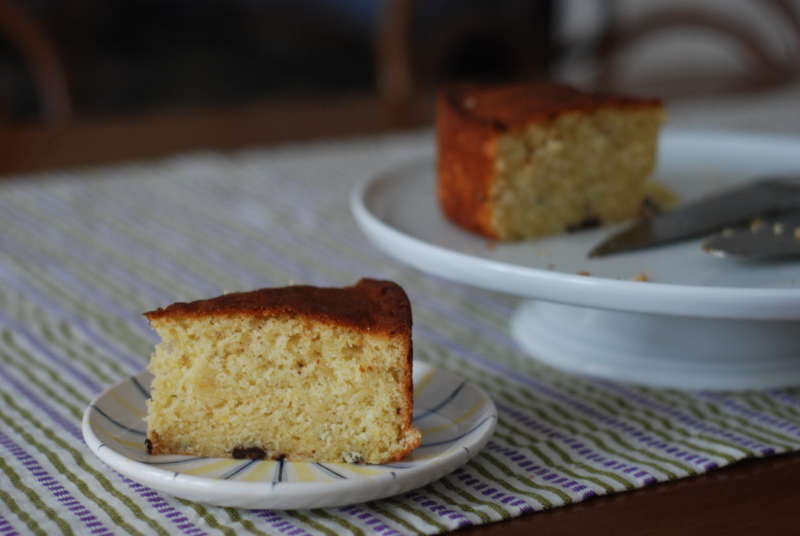
    The very first recipe that I tried was this olive oil cake from a café in London called Towpath. (I've never been myself, but I've heard about it from all sorts of discerning food people over the past several years.) And it was…perfect. The recipe was precise and correct (even without metric measurements) and the cake was out-of-this-world delicious, especially considering how simple it is. Everyone from Joanie, my baking North Star, to my father, who'd usually rather eat a plate of kimchi than a piece of cake, was ravished by it. By a simple, orange-scented olive oil cake, you guys!

    I think the reason it was such a home run, beyond the fact that it was such a pleasure to follow such a well-written recipe, was a combination of the cake's flavor and its texture. The flavor was sort of delicate and floral, but also satisfyingly creamy and comforting, like a really good yellow cake. The crumb was fine and moist, but not greasy or oily in the least. Sturdy, too, the kind of thing you could almost eat out of hand, but without being dry or tough. It was marvelous. (The only weird thing? No salt in the recipe. The recipe came to Towpath via a Tuscan olive estate, which explains the lack of salt – most Italian dessert recipes (most European ones, actually) eschew salt. Out of habit, I added a pinch. You can go either way.)

    When I made this, in mid-February, we still had a few chocolate Santas lying around the house and one of them was a fancy dark chocolate one, so on a whim, I chopped it up and added it to the cake. I think it was a mistake, or rather, an unnecessary fiddling and one I wouldn't recommend. This cake deserves to be left alone, served up proudly in its stark simplicity. No chocolate or whipped cream needed.

    The recipe's in my forever files; the book's on my kitchen counter.

    Note: This post includes affiliate links and I may earn a commission if you purchase through these links, at no cost to you. I use affiliate links only for products I love and companies I trust. Thank you.

    Olive Oil Cake
    Adapted from The London Cookbook
    Makes one 9-inch round cake

    2 cups all-purpose flour
    1 tablespoon baking powder
    1 1/4 cups sugar
    3 eggs
    3/4 cup good extra-virgin olive oil
    3/4 cup whole milk
    1 to 2 teaspoons grated orange zest
    Juice of 1 orange
    Pinch of salt, optional

    1. Preheat the oven to 350 F/180 C. Butter the sides of a 9-inch springform pan and line the bottom with parchment paper.

    2. In a small bowl, stir the flour and baking powder together.

    3. Place the sugar and eggs in the bowl of a stand mixer. Beat on medium speed until thick and pale yellow, about 3 to 5 minutes.

    4. Add the olive oil, milk, orange zest and juice and beat for another minute or two. Turn off the machine and fold in the flour mixture by hand.

    5. Scrape into the prepared baking pan. Bake for 45 minutes, until golden brown and a knife inserted into the center comes out clean. Cool on a rack completely before serving.