Giveaway

Today is the publication day of Classic German Baking! I woke up this morning feeling like a child on Christmas morning, all full of the jitters and happy adrenaline. What an incredible journey it's been, from signing the contract in the spring of 2014, through all the months of testing and writing and testing again and writing some more, getting through the cover design, up through today. I poured my heart and soul into the book and feel so honored to be bringing not just these recipes but all this information about the wonderful German baking culture and its inherent coziness and comfort to readers everywhere. Those of you who pre-ordered your book online should be receiving it today or at least this week. As of today, you can find the book in stores. On Goodreads, you can read the first reader reviews. And next week, I start my book tour in the US. Dearest readers, I hope you love the book!

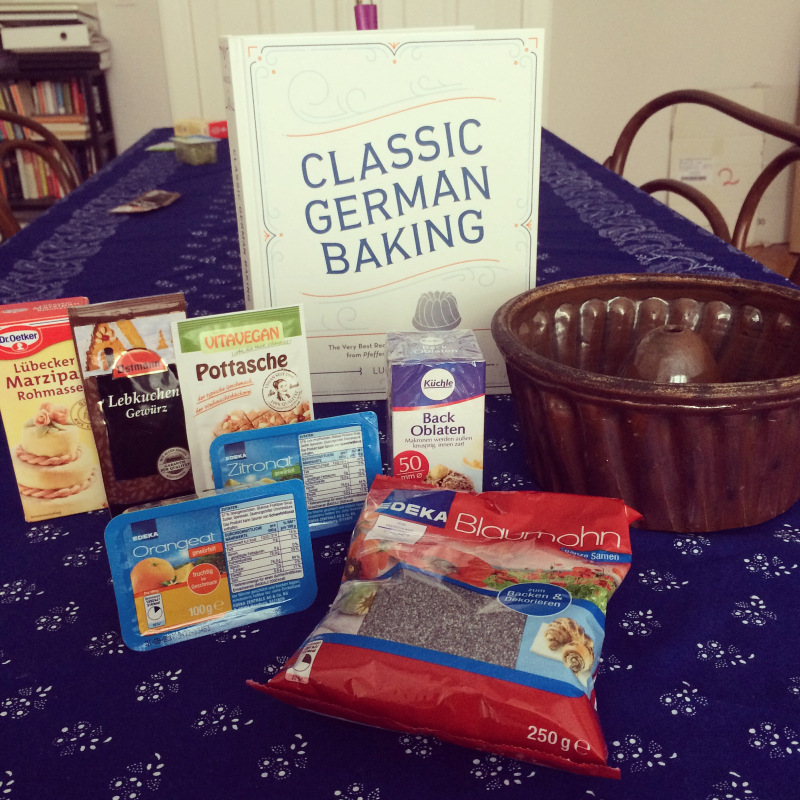
In honor of today, I'm doing a giveaway on Instagram, so head on over there to enter (click!). The winner receives a copy of the book, an antique stoneware Gugelhupf pan, and a little starter kit of specialty ingredients for German baking, which I hope is especially useful with Christmas baking lurking just around the corner. The kit includes almond paste (a recipe for which is in the book), poppy seeds, candied citron and orange peel, Lebkuchen mixed spice (a recipe for which is in the book), baking wafers for Elisenlebkuchen, baker's ammonia (not pictured, because I still have to track it down!), and potash (also known as potassium bicarbonate or potassium carbonate). Sources for all of these ingredients and more are in the book, on page 270.

As I mention in the book's acknowledgments, I could not have written the book without the essential help I received from Maja Welker, a home baker extraordinaire who assisted me throughout all the entire recipe testing process. It's no exaggeration to say that finding Maja felt like some kind of cosmic fate. I quite literally could not have found a better person to work with on this particular book. Maja kept me company in the kitchen and as I researched, got as excited about leavener variations as I did (more even, maybe?), contributed some of her favorite recipes (her Marmorkuchen, marble cake, is the best version of marble cake I've ever had), never lost steam, even in the face of nearly 10 rounds of Pfeffernüsse testing, pinch-hit on our photo re-shoot day when I was actually delirious with the flu, and generally has been an amazing friend and inspiration throughout. Which is why, on this marvelous day, I'd like to publish a little interview I did with Maja, so you can read more about the person who practically overnight became such an integral part of the book.

Maja and Aubrie

Maja and Aubrie Pick, the photographer, on the day we re-shot ten (!!) recipes for the book in my apartment.

1. So, Maja, where in Germany are you originally from?

I grew up in Uelzen, a small town south of Hamburg in the Lüneburger Heide, where Heidesand (Almond Sugar Cookies, page 15) and Heidjertorte (Lingonberry Buckwheat Cream Torte, page 119) originate from.

2. And how did you end up in Berlin?

My husband got a job here seven years ago and since I still worked as a freelance translator back then, I just packed up my desk and followed him.

3. What got you to answer my (desperate) call for help?

I had stumbled upon your blog relatively recently (on the day of the Cold Summer Borscht to be exact – where normal people have a visual or auditory memory, I have a culinary one), but was instantly hooked. Within a couple of weeks I had read your entire blog from end (= the most recent recipe) to beginning. When I saw your "Help Wanted" post it seemed as if you had tailored it just for me – but moreover, I felt we had a common style. The recipes on your blog came from real life, were meant for everyday cooking and baking and not just for show. It would have felt difficult to work in the kitchen with someone who wanted every dish and every cake to be perfect and a masterpiece. Since I had gotten tired of the solitary translator work and my other job at Pfefferkontor, a small mail-order spice shop, only kept me occupied three days a week, I decided to jump at it.

4. How old were you when you started baking?

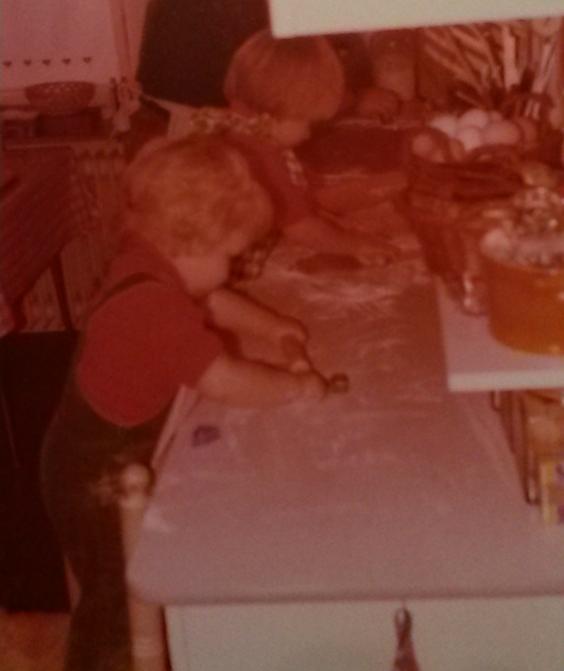
I actually can't remember NOT baking. There is photographic evidence of me at 20 months standing next to my older sister, both of us on chairs to be able to reach the work top, rolling out dough and cutting out cookies. I actually still have some of these cookie cutters and use them every Christmas!
MajaKüche

5. Okay, so I guess that partially explains how you got to be so incredibly good at it!

It certainly helped that I like to eat! As you can see above, we were encouraged to help in the kitchen early on. I had barely learned to read when I fell in love with cookbooks (which I still read like novels, picture books and encyclopedias) and whenever I wasn't lying on the living room couch or my bed with an actual novel or a food magazine, I could be found in the kitchen baking. All in all, I spend quite some time there: braiding rich yeasted loaves for Easter breakfast, swirling Marmorkuchen for birthdays, building gingerbread houses during Christmas time – but it almost never feels like a chore. And when you find yourself with your apron on so often and loving it, you can't help but become good at it.

Lebkuchenhäuser

Maja and Bertram's homemade Lebkuchen houses. I mean!!!

5. What role did baking play in your childhood?

My mother was a wonderful cook and baker and we always had home-baked cake or cookies for Nachmittagskaffee (yes, we had some kind of baked goods and tea or coffee every single afternoon!). My father loved cake so much that every time he went grocery shopping he returned with at least one additional package of yeast "just in case you ladies were in the mood for baking a yeasted plum cake or Swedish cinnamon buns". What a shame it would have been to be out of yeast then!

6. And so what role does baking play in your life today?

Somehow, baking is therapy for me: punching and pummeling a yeasted dough, the comforting reliability of a sponge cake, the fascination of Pfitzauf (a Swabian cousin to Yorkshire pudding) rising in the oven – it always works wonders! Plus I discovered that you can make other people really happy by baking for them. In recent years we have basically stopped buying "real" birthday or hostess gifts, and make cookies instead. I had never thought about it becoming an obvious routine until I heard our friends' 5-year-old son say to his parents, "I TOLD you Maja and Bertram would bring cookies." Luckily, Bertram loves to eat and bake as well (although I'd say he has more of a normal person's approach to baking as opposed to my obsession). There are a couple of recipes in our household that he is always responsible for, like Zupfkuchen (Chocolate Quark Cheesecake, page 54), Quarkstollen (Quark-Almond Sweet Bread, page 256) or Nusskuchen (Toasted Hazelnut Loaf Cake, page 42).
Schachbrettkekse

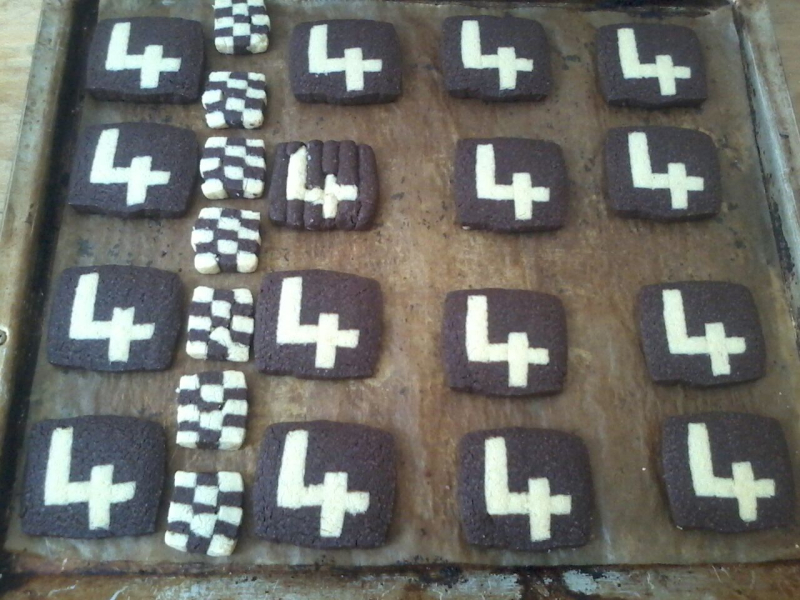
A gift for a 4-year-old's birthday…

7. What was your favorite thing about working on Classic German Baking?

Working with someone who didn't take the German cake culture for granted but recognized it for something worth writing home about! And I loved that you are as excitable about small things as I am: the flaky crust of our very first Pflaumenstrudel (and the second! and the third!!), the soft, yielding texture of a well-kneaded yeast dough,… this list could go on for a while.
IMG_9187

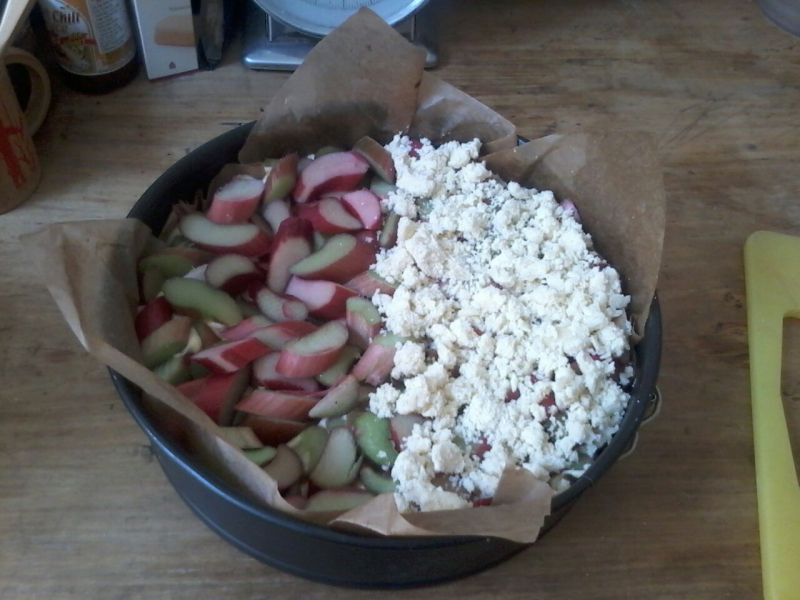
Testing rhubarb cake with and without Streusel.

8. And, I have to ask…what was your least favorite thing (ack!)?

Having to drop some recipes! It wasn't so hard with a couple of them (a truly disappointing applesauce cake or some of the blander Linzer tortes) but the Rhubarb Meringue Cake? Apfelbrot? Weiße Lebkuchen? None of them made it into the final selection, but they were all delicious in their own right and I will definitely give them second (or third) chances! Oh, and sometimes it was difficult to remember to measure everything carefully. And things like, "How much longer did we bake this version of the cake until the filling finally set?" or "How much cinnamon did I add to this next batch, because the flavor of the last one was much too weak?" I guess I learned that testing recipes for a cookbook is quite different from impulsive home-baking…
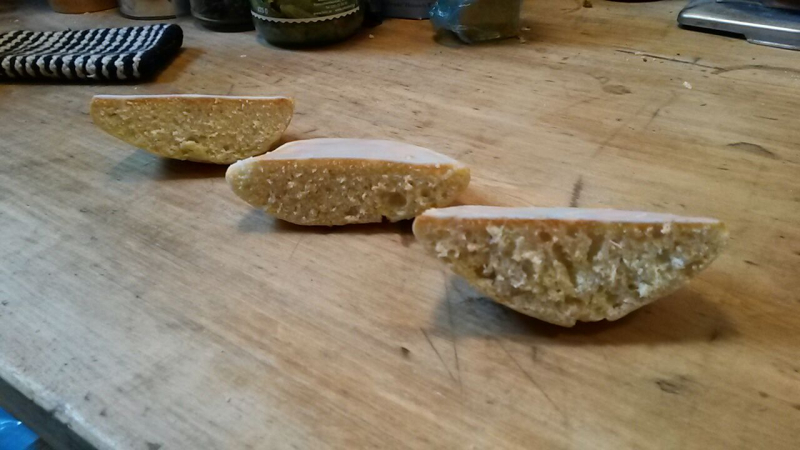
Amerikaner

Testing Amerikaner with different raising agents.

9. Do you have a favorite recipe in the book?

No chance! I couldn't even pick one favorite from each chapter, so I won't try.

10. Which of the recipes in Classic German Baking have become favorites in your home now?

Some of them were favorites even before (like Marmorkuchen (Marble Cake, page 72), Zwiebelkuchen (Savory Onion Cake, page 152) or Schwarz-Weiss-Gebäck (Checkerboard Cookies, page 16). But I have definitely added Quarkbrötchen (Sweet Quark Rolls, page 188), Schwäbischer Prasselkuchen (Swabian Streusel-Jam Slices, page 34) and Salzekuchen (Hessian Potato Cake, page 156) to my monthly rota!
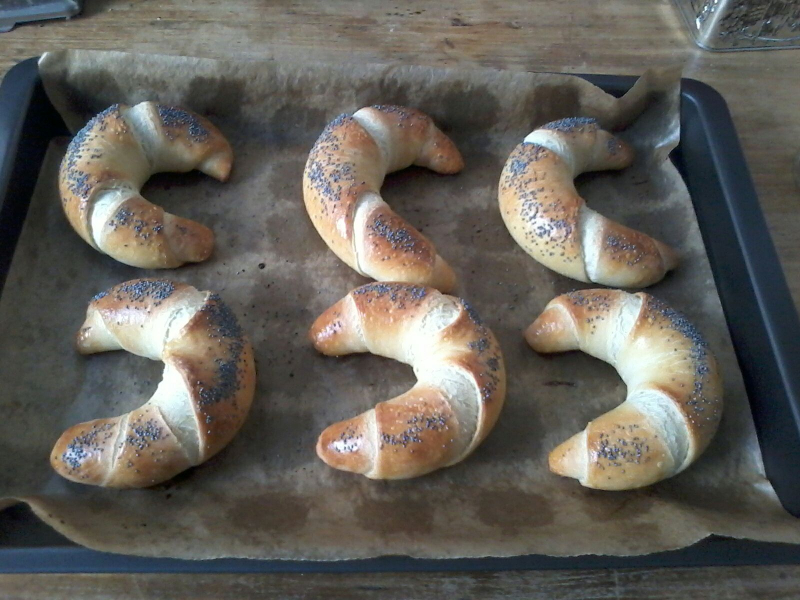
Mohnhörnchen

Testing Mohnhörnchen on a weekend.

11. Okay, now the really important questions: First of all, when do you start baking for Christmas?

As we always get together with my sister on the first Advent weekend, I try to have at least 5 or 6 different homemade cookies for our Adventskaffeetrinken ready by then. To be able to achieve this, I usually start preparing different doughs sometime in early November and stash them in the freezer. Nussstangen (Hazelnut-Almond Batons, page 238) are always among these! Other cookies have to ripen anyway, so I start baking Lebkuchen in the middle of November.

12. And what are you planning on baking for Advent and Christmas this year?

The usual: some new recipes, some old ones (the old ones being traditional cookies from Bertram's family, or from my family, the better ones in the "new" category from recent years – it's an ever-growing list!). I never manage to bake all of the different cookies I write down on my "to-bake" list sometime in November, but we usually have between 14 and 18 different kinds. Plus I really want delve into Lebkuchen a bit more this year. And yes, Christmas in our home is mostly cookies – plus Linzer Torte (page 134) and maybe a Baumkuchen (page 259).

As usual, Maja, I'm in awe. Thank you, thank you, thank you for everything!

Note: This post includes affiliate links and I may earn a commission if you purchase through these links, at no cost to you. I use affiliate links only for products I love and companies I trust. Thank you.

 Save

Save

Save

Save

Save

Save

Save

Save

Save

Posted in

84 responses to “Classic German Baking, Out Now!”

  1. Jeannie Graves Avatar
    Jeannie Graves

    I received this wonderful book and am very slowly reading through it. When my husband was alive, we spent the first two weeks of advent most years in Hamburg with his mother. I always bought as many books as I could carry back, mostly on food and cooking and still have and use them. One of my favorite things to do was to visit the spice aisle at the local market and bring home things that were hard to find back home in California. Like Hartshorn Salz. When I moved to Arizona last year I had to leave my beloved spice collection behind but have since re-stocked most things. As far as baker’s ammonia goes (along with most other uncommon ingredients), you can order it on Amazon.

    Like

  2. CarolJ Avatar
    CarolJ

    Luisa, congratulations on the achievement and thank you for the wonderful interview. Having lived in Germany (Munich and Freiburg) at different times and loving the traditions of Kaffeetrinken and Konditoreibesuche, I’m so looking forward to delving into the book. I both smiled and sighed at Maja’s regret about the rhubarb meringue cake. One of the most ethereal confections I’ve ever eaten was a Rhabarbertorte from a Konditerei in Freiburg (which has since given way, alas, to some international chain store), which had a crisp bottom crust, topped with a very thin layer of something that kept the crust from geting soggy from the rhubarb-custard filling above; then there was another very thin mystery layer between the rhubarb and the meringue, which itself was delicately creamy but with a micro-thin crispy, crackly surface showered with powdered sugar and a few sliced almonds. All those different flavors and textures in one bite. You can imagine why I haven’t stopped dreaming about it; meanwhile I make do somehow with pie and snacking cake.

    Like

  3. jemima Avatar
    jemima

    It did and I DO!!! A gorgeous book.

    Like

  4. Ruth F. Avatar
    Ruth F.

    Love this interview so much. She should go on tour with you.
    My copy came last night. So beautiful, meticulous, and thoughtful. I’m in awe.
    Mabrouk! Mazel tov!
    ruth f.

    Like

  5. Jennifer Jo Avatar

    That does it. I’m ordering the book right NOW.

    Like

  6. Lulu Avatar
    Lulu

    Louisa, your book arrived late last week and I thought it was a mistake and did not open until today. (I put a book on my wish list and ordered your’s along time ago) I was thrilled to see it when I opended it!! I love it. I love the cover, not just a sleeve so the pretty will always be there. Had to study the pictures first. Started working on the lovely stories. Thanks so much for the recipes for ingredients we don’t have around here. Mom and I had always fretted about Quark.
    Mom passed in April so been a little difficult getting through the blog and pics today without some tears. Will be sending a copy to my nieces and nephews.
    Happy holidays to you both!

    Like

  7. Luisa Avatar

    Ooh, goodness, that sounds perfect! Thank you for your lovely words.

    Like

  8. Luisa Avatar

    Thank you so much, dearest Ruth!

    Like

  9. Luisa Avatar

    Thank you! xo

    Like

  10. Luisa Avatar

    Oh my goodness, a huge hug to you. I hope the book turns out to be a delicious comfort for you and your family.

    Like

  11. Cathryn Avatar
    Cathryn

    Dear Luisa,
    I ordered your book and read it cover to cover over the weekend on my Kindle. I am currently in Mali and Burkina Faso for a year of PhD dissertation research. It’s a dream come true to be here, but it is difficult to be so far away from my life at home. I won’t be back to baking and cooking in my kitchen until next August. In the meantime, your wonderful writing is very good company. I will be dreaming about making many of these recipes and buying a hard copy of the beautiful book when I get home.

    Like

  12. TJ Avatar
    TJ

    Luisa, I can’t wait until my copy of your book arrives. I haven’t always been lucky in adapting my recipes to ingredients that are readily available around here. I’m sure your book will remedy that, and I can’t wait to bake for my kids the way my mother and grandmother have baked for me. Congratulations on this huge accomplishment!

    Like

  13. Tina Avatar
    Tina

    Luisa,
    unfortunately I am home sick with my copy of the book stuck at the store… But I have already read the amazon preview very closely and since I am living in Germany was wondering, whether you have a rule of thumb for substituting the vanilla extract with homemade Vanillezucker? I do have both but would like to go the traditional German route…
    Thank you and I look forward do holding that book in my hands,
    Tina

    Like

  14. Luisa Avatar

    I specifically developed the recipes only with vanilla extract because the book was written for American bakers and kitchens, where good-quality vanilla extract is the norm, but I have to say that I on principle never use Vanillezucker either (except for Chrisbrot). I don’t particularly like it; the store bought kind is often made with synthetic vanilla, it adds more sweetness to a recipe, etc. And the “authenticity” of the recipes is in no way compromised by using extract. So I don’t really have an answer for you on substituting Vanillezucker. Try by using 2 teaspoons of Vzucker when 1 teaspoon of extract is called for?

    Like

  15. Luisa Avatar
  16. Luisa Avatar

    That is just lovely to hear. Good luck with your research; the baking can wait! 🙂

    Like

  17. Florian Avatar
    Florian

    We just send a copy of it to a German-American couple as a late wedding present. A few hours after it was shipped we got a photo of a Streuselkuchen back 🙂

    Like

  18. Luisa Avatar

    Aw, lovely! Thank you!

    Like

  19. Jenny Avatar
    Jenny

    I’ve been furiously gathering ingredients for lebkuchen since your book arrived on Friday! One note (at least for American readers): my local IKEA does not carry baker’s ammonia or potassium carbonate and claimed that they never have, though IKEA is listed as a source for both in the book. I have about twenty recipes marked to try already, and I can’t wait to get started!

    Like

  20. Victoria Avatar
    Victoria

    Hi Luisa, Is there a kugelhof recipe in your book? I recently had a delicious kugelhof at a Houston Texas restaurant and
    dying to make one.
    Thanks!

    Like

  21. Luisa Avatar

    Yes! Listed as Gugelhupf.

    Like

  22. Luisa Avatar

    I am really sorry about that. Not sure how that slipped in there. Will be fixed in the reprint; thank you for calling my attention to it! Please let me know of you have a problem finding anything else.

    Like

  23. Lisa Finnimore Avatar
    Lisa Finnimore

    Hello Luisa
    I am really enjoying your book very much. I need a bit of advice though – I have just mixed up a batch of the Lebkuchen and I am afraid that I might have made a mistake. I used potassium bicarbonate rather than potassium carbonate – is the difference between these leaveners enough to mean that my batch of dough won’t work? I know that you specify potassium carbonate rather than potassium bicarbonate in the recipe, but your comment in this blog post suggests that the two are the interchangeable – you say “potash (also known as potassium carbonate or potassium bicarbonate)”. I sort of want to know now if my bicarbonate version won’t work so that I don’t wait patiently for the dough to mature and be beautiful, only to be disappointed!! Thank you for any advice x

    Like

  24. Luisa Avatar

    Don’t worry – it’s the same thing.

    Like

  25. Agnes Avatar
    Agnes

    I adore your book! Having studied in Germany and with my family coming from Nordschleswig (quite close to the Danish-German border), I have a huge soft spot for German baked goods – can’t wait to try every single recipe! (so far I have made the Rosinenzopf, which was delicious and transported med right back to my childhood, only was it even better than what I ate then). I’m going to Berlin in a few weeks and while I’m there I would like to buy the different cake pans you recommend – would you be so kind as to recommend a few good shops where I possibly could get them in the right sizes?
    Sincerely,
    Agnes

    Like

  26. Luisa Avatar

    Thank you so much! So happy you love the book. My favorite kitchen store in Berlin is Kochtail, on Invalidenstrasse 150. They will have everything you need! Kochtail also stocks the book, so you can double-check anything you need while there. 🙂

    Like

  27. Agnes Avatar
    Agnes

    That sounds wonderful! Thanks a lot 🙂

    Like

  28. Rebecca Avatar
    Rebecca

    Many thanks for the advice on where to buy the book in Berlin. I scrolled right down here (and read all the comments). Off to buy it now – I will enjoy the walk from my hotel in Gendarmenmarkt and see a bit more of Mitte on the way

    Like

  29. Agne Avatar
    Agne

    Oh, I already wish for an
    “Even More Classic German Baking”…..

    Like

  30. Eva Avatar
    Eva

    Late to the party, but Luisa, I love the book!! What a great collection of recipes! Having been born and raised in Germany and now living in the Midwest, I wasn’t sure if I really needed this book and ordered it from the library. I don’t know what I was thinking because of course I need my own copy! As well as a few copies for my girlfriends, haha. I think you really managed to cover the whole range of German baking, and you explain the German “cake culture” well. Your passion for the topic is obvious, and in my view, this book is a classic already. Great work!

    Like

  31. Luisa Avatar

    Thank you so much, Eva! That means so much.

    Like

  32. Ena Avatar
    Ena

    ”Classic German Baking” might just be one of my favourite cookbooks ever, not just this season. So beautiful and comprehensive. Every few days I open it, reading and planning what next to make. So far I’ve made Kirschstreuselkuchen (last weekend) and Sacher torte (this weekend), trying to start adopting wonderful German tradition of coffee and cakes (similar to Bosnian one, but I’ve been somewhat lazy lately). Sacher torte is so, so wonderful. Very often Sacher can be lackustre, especially the crumb, but this one just hits the spot. My only slight issue was with the chocolate glaze that just wasn’t pourable after setting 7-8 minutes as much as yours was on the photos on Instagram and the cookbook so the finished thing wasn’t as smooth-looking on top. But it still looks and tastes pretty much perfect. My mother always says that for her Sacher torte is one the least appealing desserts (even the ones she tried in Vienna) but she rated this one 10 out of 10.

    Like

  33. Luisa Avatar

    Thank you, Ena! I’m sorry you had trouble with the glaze – can you tell me what brand of choc you used or what percentage cocoa solids it had? I’m trying to figure something out. Thank you!

    Like

  34. Carlton L. Barnes Avatar

    Really love the way you explain and also lots of likes to the cover page. Awesome work.

    Like

Leave a comment