DSC_8934

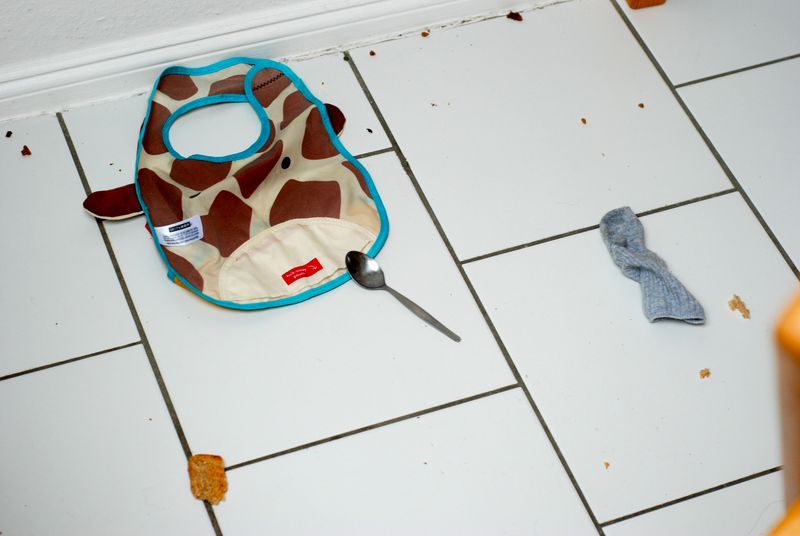
Hello! Don't think I've forgotten about this little series. It's just that for a while there, well, Hugo sort of went on a food strike. (In addition to the nap strike! I know.) And it was so strange and so frustrating that I sort of couldn't bring myself to write about it while I was in it. You know? He stopped wanting to eat my lovingly prepared vegetable purées, he stopped being interested in the food I made for myself and he threw everything I put in front of him to feed himself on the floor. A few times, he even reached inside his mouth after I put a spoonful of food in it and sort of clawed out the food, shrieking all the while in disgust. It was awful.

In retrospect, I think it was an unholy combination of teething and too
many bottles and textural issues and also just plain babyhood and I'm
very, very glad to say we seem to have worked things out. Now
Hugo gets a big bottle first thing in the morning and another big one
before bed, but the rest of the day, he eats three proper meals at the
table. It's so satisfying and wonderful to see him digging in to
whatever I put in front of him. Phew.

But some of my behavior while this was going on was giving me pause. When Hugo refused to eat something, I'd quickly prepare something else and offer to him instead. When that got thrown on the floor too, I'd look for yet another thing to give him, often resorting to buttered bread or pasta. After all, I couldn't very well let my almost 11-month old go hungry, could I? Those rules about not cooking things to order for your kids obviously were only meant for older kids, right?

Except then I was hanging out with my French girlfriend Marguerite and when I told her about what was going on and how I was dealing with it, she did one of those half double-takes backwards and shook her head gently. "Oh, no, Luisa. He refuses to eat? Then that's it. Don't make anything else for him." But, but, I protested. He's just a baby! Won't he be hungry? Won't he wake up in the middle of the night? Aren't I sort of then sending him to bed with no supper and won't I be judged cruelly for that and sent packing straight to Hades? "No! He has his evening bottle, right? He's almost 11 months old. He'll be fine." And, um, she was right.

So today, folks, I want to write about French rules for feeding children.

When I was pregnant, I read Pamela Druckerman's Bringing Up Bébé (French Children Don't Throw Food is the UK title). It had gotten a lot of mixed reviews – I got the impression that many Americans didn't like the idea that the French, yet again, were trying to tell them how to do things better. But I really liked the author's story, her self-deprecation and her admiration for what the French do actually get right with child-rearing. (And yes, at this point, you may substitute many other words for French: Europeans, Asians, common-sense folks, the older generation.) Particularly with regards to food. (NB: The book deals with many aspects of child-rearing in France; food is just a small part of the book.)

Then, I decided to read Karen Le Billon's French Children Eat Everything, which centers around the author's experience of moving to France with her two small, very picky children and learning the hard way about how to get them to eat better and behave better around food in general. Le Billon's husband is French and the pressure from his family and the community is very hard on the author; I often felt such sympathy for her predicament, caught between her own culture which had influenced her daughters' bad habits and her French in-laws's glowering disapproval. It can't have been easy for her to be the only foreigner in a small French village, surrounded by such rules and rigidity. By contrast, Pamela Druckerman's experience is far gentler. The French come across far nicer, too.

But both women observe many of the same phenomenon when it comes to children and food in France:

1. Babies are fed things like blue cheese, puréed beets and other strongly-flavored food right from the start.

2. There is a great reverence for the ritual of sitting down at a nicely set table for each meal, together.

3. The emphasis is on food being a purely sensual experience, not one in which punishment or reward ever plays a role in any way.

4. The importance of serving food in courses (vegetables to start, for example, then a main course of pasta, perhaps, or meat, and then fruit or yogurt for dessert), to give even a baby a sense of how a proper meal should unfold.

5. Never, ever, ever eating outside of set mealtimes (which are breakfast, lunch, afternoon snack and dinner).

6. Following the child's lead if he or she refuses to eat and simply ending the meal. No drama, no fuss.

There are others, too, but these are the ones that resonated the most with me. And they inspired me to make a few changes to mealtimes with Hugo. Not only do I no longer continue offering him different things until something "sticks", I also don't wheedle and cajole him into eating one more bite of anything. If he's done, he's done and I respect that. I also don't give him any snacks (though this one is a little tougher to enforce with his softie grandmothers around) in between meals, which almost guarantees that he's happy to eat his meals with real gusto.

So, tell me, readers! Have you read either of those books and if so, what did you think? Did you find inspiration in the pages or were you already feeding your children à la française? Is your home culture similarly "strict" with rules for feeding children? Or do you think the whole thing is authoritarian and awful? Tell me what you think, about any and all of it.

Also: What school lunches in Japan are like.

Posted in

58 responses to “Cooking for Hugo: A French Food Education”

  1. Irina Avatar
    Irina

    I never offer substitutions and simply end the meal if my daughter (17mo) is not eating what is offered. No pressure, no drama. If she is not eating (or throwing food on the floor), she is not hungry. She is not starving and some meals are huge and sometimes she does not feel like more than a few bites. I do not want the meal time to become a battle. Toddlers have so much to do in the day (run, play, be messy, tantrums, nap :), it always works out to 4 meals – breakfast, lunch, snack, light dinner – there is just no more time for any more food. I do not withhold snacks but do not force them either – if she is hungry or sees me cooking something, and asks for something, she only usually wants a taste.
    She is allowed to carry her juice/water or fruit smoothie cup out of the kitchen and drink it as she plays. No solid food outside the kitchen.

    Like

  2. elizatwist Avatar

    I found Druckerman’s book thought-provoking and inspiring. But it is difficult for me to read such books without jumping into a philosophical debate in my head of what is “right” and “wrong”. It took me a while to sort it all out for myself and arrive at a level of comfort with my own parenting approach which is, of course, informed by my cultural heritage. Part of my process of reflection ended up as a blog entry, and the main takeaway that remains after several months is that what each of us does is the result of the interplay of many factors, personal and cultural. Taking these out of context for the sort of debate that I often launch in my own head (back to the right / wrong notion) is crazy-making. The important thing for each of us to do is start where we are, seek new information as it seems appropriate for ourselves and implement modifications with the same logic. We are all doing just fine and we can all learn from each other if we remain rooted in our self-love. Good luck with the ups and downs of life with a babe, Luisa! Keep moving, trust in the constancy of change. Now that I’m nearly two years into this parenting adventure, those are the strategies that have worked best for me.

    Like

  3. ileana Avatar

    I like this approach. I’ll have to keep it in mind for the future!

    Like

  4. Norine Avatar
    Norine

    I think shreaking, ill mannered-children are authoritian. I am an American now grandmother, and everyone at least tastes everything that is served. No pressure – just taste. There is always something favored at the table, too. Guess what? My family eats everything with cultural curiousity and usually gusto – and with the correct fork.

    Like

  5. Nuts about food Avatar

    Although I am American, my mother is German and we grew up with the rule that we always had to finish what was on our plate. Snacking and junk food were not a part of our eating regime. I was a very picky eater as a young child and this caused endless battles at the table. When we moved to Italy around age 7 my picky habits changed and I started eating much more. I think watching my step father eat everything with passion and gusto may have influenced me. I am less authoritarian than my mom was but I never ever cater to my children (unless a meal involves ingredients that are very spicy or alcohol etc.) and they have been eating what we eat since I stopped pureeing their food. We always make them try everything and usually I insist they eat at least a small portion of something we eat on a normal basis that they don’t love, because they change their minds weekly about what they don’t like (sometimes during a same meal!). If they refuse to eat (often because they are overtired) I don’t make them, but dinner is over. The truth however is that I am very lucky and they like pretty much everything and love foreign foods too. Don’t know if it is character or if our method and our great love for food and family meals is somewhat rubbing off… I think part of it is just luck!

    Like

  6. Christine Avatar
    Christine

    I read Penelope Leach who said think of nutrition for the little ones by looking back over the week, not the day. Best advice from an older friend: “When everything is going well, something will change.” Enjoy the moment.
    We had breakfast, elevenses, lunch, a midafternoon snack or tea, and dinner. Nothing else in between, but we always ate on time, so no one got too hungry or tired. No constant “grazing” which many American households allow. After visiting family in Switzerland at 12 mos, my daughter liked a hot lunch, and because I was alone very often and bedtime comes quickly, it was easier to cook at midday than in the evening. I always made enough for a couple of days. Food is always served at the table on a plate. Absolutely no eating anywhere else in the house, unless it’s with older children and a family tradition like Friday pizza and a movie. Your furniture will last longer! No eating in the car.
    A no snacking rule exception was for traveling. I had whole grain “o’s” for those anxious moments on the plane, and while in Europe, a heel of bread for teething while out.
    I always thought those food drops over the tray of the highchair were physics lessons, and not food criticism. 🙂
    Remember that children change everyday and something they loved last week might not be tasty this week. Lots of variety mixed with comforting favorites worked for me.

    Like

  7. Mary Avatar

    Hi Luisa,
    I am catching up on reading some of your posts and this one really caught my eye.
    One of the best articles I have ever read about feeding babies is by Sally Fallon and Dr. Mary Enig (both of the Weston A Price Foundation). Best advice ever:
    http://www.westonaprice.org/childrens-health/feeding-babies
    I fed my son as they recommended (and the rest of us too) and he grew up to be a strong healthy teen. Never an ear infection! And not one cavity! And rarely ever sick. You can see a picture of him here:
    http://commanderben.com/about-2/
    Hope you’re having a great week.
    Love,
    Mary
    PS – Still reading My Berlin Kitchen. Thanks so much for giving us readers this glimpse into your life. Quite a lovely story. 🙂

    Like

  8. Nat Power Avatar

    This is a really great post and I note the lack of vehement opinion in the comments, which is SO great. We are here as a society of adults to offer advice and to share our relevant experiences. My daughter, Roxy is 9 months old. I keep spruiking the whole food approach to eating. She started BIG on FLAVOUR mainly because I was a particularly fussy child who fought with my parents everynight over the dinner table. Sadly my mother was a fantastic gourmet cook during my childhood, i think I almost beat the love of food from her.
    i have used Jude Blureau, Whole Food for Children http://www.wholefoodcooking.com.au/01-books01.html as a bible these last 4 months while introducing Roxy to flavour, texture and nutritional whole foods. I am very proud that she has yet to have food from a packet. I have really just started making meals for her that are meals for the whole family. She is loving a Karen Martini (Aust chef) Winter Minestrone with fennel. She also loves liver, mild curries, dried fruits (soaked in water to soften), porridge with anything, yoghurt with anything, baked mushrooms and all manner of what I will put in front of her. Tonight she had marinated tofu with steamed carrot with ginger and hommus.
    Not every kid is going to like every food, afterall, not all adults like all flavours of food either but there is something adventurous and inspiring about preparing new foods with love for my baby. Every time she tries something new I try something I don’t like. turns out I don’t hate kiwi fruit as much as I thought I did and i can now stand the smell of passionfruit. Be bold and just try because you never know.

    Like

Leave a reply to Sylee Cancel reply